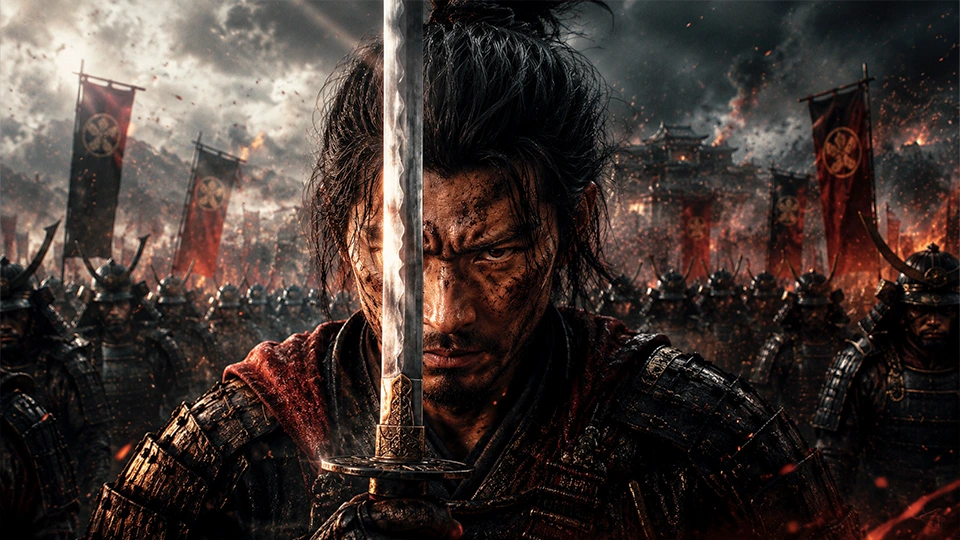
The Art of War: Key Lessons from the Book. Written more than two thousand years ago, The Art of War is still widely read because its subject extends far beyond the battlefield. Sun Tzu wrote about armies, terrain, intelligence, discipline, and command, yet the reasoning behind his ideas can also help us understand personal decisions, workplace conflict, negotiation, and power. The book’s relevance today does not lie in treating everyday life as warfare. It lies in showing that many confrontations become destructive because people act without assessing the situation, knowing their limits, or calculating the cost of their choices.
Read superficially, the book may look like a manual for defeating opponents. Read more carefully, it consistently favors intelligence over brute force. The most effective victory is not the most violent one, but the one that preserves resources, reduces losses, and avoids unnecessary combat. This changes the central question. Instead of asking only how to win, readers are encouraged to ask whether the dispute needs to happen, what price it will demand, and whether the outcome is worth the damage.
This is a book about strategy, but it is also a book about psychology. Before any external move comes perception, judgment, self-control, and knowledge. A capable person can still fail through haste. Someone can be right and lose practical reason by reacting in anger. A person may keep pursuing a goal that no longer makes sense simply because retreat feels unacceptable. The key lessons in The Art of War show that strength without awareness often creates waste, while clarity makes precise action possible.
What You Will Find in This Article
🎧 Audio version of this article
Why knowing yourself comes before facing any conflict
One of the best-known ideas associated with Sun Tzu is the need to know both your opponent and yourself. The statement sounds simple, but it demands a degree of honesty that few people maintain under pressure. During conflict, people commonly examine the other person’s mistakes in detail while overlooking their own limitations. The mind searches for evidence that it is right, reduces the complexity of the situation, and turns assumptions into certainties. The result is a strategy built on an incomplete picture of reality.
Knowing yourself means identifying your actual abilities, weak points, interests, fears, and patterns of reaction. A person who does not recognize a need for approval may accept poor conditions simply to avoid displeasing someone. Someone unaware of their impulsiveness may confuse speed with courage. A person who fears appearing weak may remain in an argument that has already lost its usefulness. In these cases, the problem is not a lack of intelligence, but a failure to see how personal emotions and needs are shaping the decision.
This kind of self-knowledge does not require an abstract investigation of personality. It can begin with practical questions. What is truly at stake? Is the goal to solve the problem or prove superiority? Is there enough information to act? Is the decision driven by conviction or by fear of losing status? Is the emotional cost proportionate to the expected benefit? These questions interrupt automatic reactions and restore the complexity of the situation.
Knowing the other person does not mean assuming hidden motives or treating everyone as a threat. It means understanding interests, resources, limits, and behavioral patterns. In a workplace negotiation, for example, knowing what you want to request is not enough. You also need to understand the organization’s needs, its financial moment, the available alternatives, and the way the decision-maker usually evaluates proposals. Preparation reduces fantasy and makes a more coherent proposal possible.
The book’s first psychological lesson, then, is that perception comes before action. People who do not understand their own position tend to overestimate their strengths, underestimate risks, and enter disputes they do not know how to manage. Strategy begins when a person replaces the image they would like to have with the most accurate assessment possible of where they actually stand.
Planning is not rigidity: it is preparation for reality
Sun Tzu gives great importance to the assessment made before battle. Conditions, resources, command, discipline, and terrain must be examined before movement begins. In everyday life, planning is often confused with absolute control. Some people plan as though they could prevent the unexpected. When reality does not match the script, they become anxious or insist on an approach that is no longer useful.
Strategic planning serves a different function. It does not remove uncertainty; it prepares responses to uncertainty. A sound plan defines an objective, identifies risks, calculates resources, and creates alternatives. It also establishes criteria for moving forward, waiting, or withdrawing. Its quality does not depend on predicting everything, but on enabling better decisions when something changes.
Consider someone who wants to change careers. Acting on dissatisfaction alone may create a financial rupture that is difficult to sustain. Remaining indefinitely in the same place out of fear also carries a cost. A strategic approach would examine savings, transferable skills, market demand, training time, and possibilities for a gradual transition. The plan might include smaller tests such as taking a course, starting a side project, or speaking with professionals in the field. The person no longer has to choose between paralysis and an unprepared leap.
Planning also requires recognizing that desire is not evidence. Wanting an outcome intensely does not make it more likely. The mind can become attached to an image of victory and stop noticing contrary signs. A mature plan therefore includes conditions for review. If costs rise, information changes, or the objective loses relevance, the strategy must be adjusted.
The preparation defended in The Art of War is not a celebration of permanent caution. It is a way of concentrating energy. When conditions are favorable, a prepared person acts more confidently because consequences and alternatives have already been considered. They do not waste time during a crisis solving what could have been addressed beforehand. In this sense, planning reduces unnecessary decisions at the moment of greatest pressure.
Winning without fighting and the intelligence to avoid pointless conflict
One of the book’s central principles is that the best victory preserves what direct confrontation would destroy. Winning without fighting does not mean passivity, fear, or a lack of boundaries. It means reaching the objective without paying the maximum price of conflict. In contemporary life, that often involves negotiation, prevention, clear positioning, and careful selection of battles.
Some arguments continue not because there is anything left to solve, but because neither person can end the exchange without having the last word. At that point, the conflict stops serving the problem and starts serving pride. Each response generates another response, hostility grows, and the original purpose disappears. Someone may feel they won the debate while losing trust, time, and the ability to cooperate.
Avoiding a pointless fight is not the same as giving in to everything. Sometimes prevention requires setting a boundary before mistreatment becomes routine. A direct conversation early on can prevent months of resentment. A clear contract can prevent convenient interpretations later. An objective refusal of an unreasonable demand may be less aggressive than accepting it and eventually reacting with accumulated hostility.
The same logic applies to inner life. Many people spend energy fighting facts they can no longer change. They replay a conversation, imagine better replies, and mentally pursue a form of repair that will never come. The conflict remains active even when the other person is absent. Winning without fighting, in this case, may mean ending the attempt to control the past and directing attention toward the decision that is still possible now.
The strategic standard is not to avoid all discomfort. Some conflicts are necessary, especially when rights, safety, or dignity are at risk. The question is which form of confrontation best protects the objective. An explosive reaction may release tension for a few minutes while weakening one’s position over the long term. Documenting facts, seeking support, communicating boundaries, and using the proper channels usually produces more durable results.
This lesson can feel uncomfortable because it contradicts the fantasy that strength must always be visible. Many important victories do not provide the dramatic feeling of defeating someone. They appear as a problem prevented, a provocation declined, a carefully built agreement, or a withdrawal made at the right time.
The psychological cost of prolonged battles
Sun Tzu repeatedly warns about the exhaustion caused by long campaigns. An army loses resources, morale, and capacity when war drags on. Prolonged conflict has a similar psychological effect. Attention becomes fixed on threat, the body remains alert, and other areas of life begin to shrink. Even when a person believes they are defending something important, they may fail to notice that the price has grown far beyond any possible benefit.
A long workplace dispute, for example, can invade evenings, weekends, and family relationships. The person reconstructs conversations, anticipates attacks, and interprets neutral events as signs of hostility. This state reduces mental flexibility. The more energy has been invested, the harder it seems to leave the dispute. The sunk-cost trap then takes hold: the person continues not because there is still a good chance of success, but because stopping would make the previous effort feel wasted.
The same thing happens in relationships that have become a sequence of accusations and defenses. A couple may discuss the same issue repeatedly without changing behavior or creating verifiable agreements. Repetition creates the impression that the problem is being addressed, but it merely reproduces the pattern that maintains it. Without a change in method, duration is not progress.
Strategic thinking requires calculating costs that usually remain hidden. How much sleep, concentration, and health are being consumed? Which opportunities are being ignored? Is the dispute moving the person closer to the goal, or merely preventing acceptance of a loss? Is there a deadline or a standard for reassessing whether to continue?
Ending a prolonged battle may require agreement, mediation, a change of environment, or acceptance that a particular result will not be achieved. This does not make the decision easy. Real losses must be acknowledged. Yet preserving resources is also a form of victory. Persistence is a virtue only while it still serves a rational purpose. Once it becomes automatic, resistance turns into self-destruction.
How to recognize strengths, weaknesses, and vulnerable moments
The book pays close attention to strengths and weaknesses, both one’s own and an opponent’s. A contemporary reading of this principle requires care. The point is not to exploit another person’s vulnerability cruelly, but to understand that no strategy works the same way under every condition. Ability is always relative to context.
An articulate person may lead a meeting well and still make poor decisions when humiliated. Someone with excellent technical skills may fail to communicate their value. A creative team may produce outstanding solutions but lose efficiency when responsibilities are unclear. Naming strengths without identifying the conditions that support them creates fragile confidence.
Weaknesses are not permanent identities either. They may result from inadequate preparation, missing information, exhaustion, an unsuitable environment, or excessive exposure. Instead of concluding, “I am incapable,” a strategic assessment asks: under which conditions does performance decline, and what can be changed? This shift avoids both self-deprecation and false confidence.
Recognizing vulnerability includes choosing not to decide at certain moments. Hunger, sleep deprivation, anger, and anxiety alter risk perception. Under these conditions, the mind tends to seek immediate relief. A message is sent too early, a proposal is rejected out of pride, or a promise is accepted simply to end the pressure. Delaying a response until clarity returns may be the most effective action available.
Important information and resources also need protection. Revealing every plan to everyone can provide brief validation but also increases interference and expectations. Not every project needs to be announced before it takes shape. Discretion is not necessarily manipulation; sometimes it is simply the protection of the space required to think and experiment without public pressure.
The goal is not to eliminate vulnerability, which is impossible, but to prevent it from directing decisions without being noticed. Strategic strength means knowing where you are prepared, where you need support, and under which circumstances the risk exceeds your current capacity.
Self-command: refusing to hand your decisions over to impulse
Sun Tzu describes provocation as a tool for creating disorder. A commander ruled by anger can be induced to act in the opponent’s interest. This mechanism remains easy to recognize in modern arguments. Whoever controls the stimulus can often influence the response of someone who does not control their own impulse.
Provocations work because they strike sensitive points: pride, fear, the need for recognition, and intolerance of frustration. A rapid response feels spontaneous, but it may be highly predictable. Public criticism produces immediate defensiveness. An ambiguous message generates a chain of interpretations. An offensive opinion on social media captures attention and leads a person to amplify the very content they intended to oppose.
Self-command does not mean the absence of emotion. Anger, fear, and outrage can signal important problems. The danger lies in turning the first impulse into an order. Between feeling and acting, a stage of evaluation is needed. What is this emotion indicating? Does the desired response protect my objective? Am I reacting to the present fact or to an earlier wound? Is the other person trying to solve something, or merely trying to obtain a reaction?
In practice, this interval can be built through simple measures: not responding immediately, writing without sending, asking for time to analyze a proposal, or speaking with someone who is not emotionally involved. These actions do not remove the conflict, but they keep the intensity of the moment from choosing the entire course.
There is an ethical dimension as well. Knowing another person’s emotional triggers creates power, but it does not justify manipulation. A mature application of the lesson involves recognizing provocations and regulating one’s own conduct. Using vulnerabilities to control people may produce temporary obedience, but it destroys trust and creates relationships based on vigilance.
True strategic command is internal. Someone who remains balanced only when everyone treats them exactly as desired does not possess self-control; their stability depends on external behavior. Autonomy begins when a person can feel the impact of a situation without automatically surrendering the direction of their actions to that impact.
Adaptation and flexibility when conditions change
The book compares strategic action to water, which takes the shape of the terrain. The central idea is that there is no universal tactic. What worked before may fail when conditions change. Attachment to a single way of acting turns experience into rigidity.
This rigidity appears when someone builds an identity around a method. A professional may resist learning new tools because earlier expertise brought recognition. A leader may insist on direct control after the team has grown. A person may use defenses developed in a past relationship in a current one. In each case, an old solution remains active after the original problem has changed.
Flexibility does not mean changing your mind under every form of pressure. It means preserving the objective while adjusting the means. People who cannot distinguish an objective from a method interpret any change as defeat. If one route is blocked, they insist on it to prove consistency. Strategy asks whether another route can produce the same result at a lower cost.
Adaptation requires receiving information without treating it as an insult. Poor results are not only failures; they are data about the relationship between method and context. An unsuccessful attempt may reveal inadequate preparation, bad timing, unclear communication, or a poorly defined objective. An error becomes more expensive when it is defended to protect self-esteem.
Flexibility also depends on having a range of options. The fewer alternatives a person knows, the more threatening any change appears. Developing skills, listening to different perspectives, and testing approaches on a small scale expands the available choices. Security does not come from guaranteeing that everything will stay the same, but from trusting one’s capacity to respond when it does not.
Information, perception, and reading the environment
In the final chapters, Sun Tzu emphasizes prior knowledge and information obtained through human contact. Although the context is military, the principle is broad: important decisions should not rest only on imagination, rumor, or projection. Evidence close to reality must be sought.
The human mind does not receive information neutrally. It selects what confirms expectations and gives extra weight to emotionally intense signals. At work, an insecure person may interpret a short reply as disapproval. In a relationship, someone expecting abandonment may treat any request for space as proof of rejection. The feeling is real, but its interpretation still needs examination.
Reading the environment requires separating observation from conclusion. “The message has not been answered for six hours” is an observation. “The person has lost interest” is a hypothesis. “My manager requested changes to the project” is a fact. “My manager does not trust me” is an interpretation. This distinction reduces decisions based on stories that feel obvious only because they match an earlier fear.
Seeking information also requires selecting appropriate sources. Advice from people far removed from the situation may reflect their own experiences more than the concrete problem. For career decisions, industry data and conversations with people who work in the field are more useful than generic opinions. In conflict, asking directly and confirming agreements is better than relying on third parties.
Information, however, must not become an excuse for endless delay. Something will always remain unknown. The goal is to acquire enough knowledge to reduce predictable mistakes, not to eliminate all uncertainty. A sound decision combines the available evidence, awareness of its limits, and willingness to correct course.
Leadership, discipline, and consistency
The Art of War connects command with wisdom, sincerity, benevolence, courage, and rigor. It also emphasizes organization and discipline. These elements show that leadership is more than charisma or formal authority. A group needs to understand its direction, responsibilities, and standards. Without that clarity, energy is scattered and internal conflicts consume resources that should support the shared objective.
In the workplace, inconsistent leaders create watchful environments. If rules change according to mood, people stop focusing on the task and start trying to predict the person in charge. Constant uncertainty reduces initiative because any decision may be punished in hindsight. Effective discipline is not permanent threat; it is enough predictability to coordinate action.
Benevolence and rigor are not opposites. A leader can respect people while still requiring accountability. They can understand a difficulty without pretending the result was adequate. Problems arise when care is confused with the absence of boundaries or firmness is used to justify humiliation. At either extreme, the team loses clarity.
Consistency also applies to personal leadership. Goals depend less on occasional enthusiasm than on structures that sustain behavior. If someone wants to study but leaves every available hour open to external demands, the intention has not been converted into a method. If a person wants to reduce spending but never tracks expenses, they depend on willpower at the moment of every purchase. Discipline organizes the environment to reduce repeated conflict between decision and impulse.
This does not demand punitive rigidity. Systems must be realistic. An impossible routine creates guilt rather than consistency. A method should account for energy, limitations, and unforeseen events. Strategic discipline protects what matters through clear, repeatable agreements instead of demanding daily heroism.
How to apply Sun Tzu’s lessons without turning people into enemies
The popularity of The Art of War in business and personal development has produced problematic interpretations. When every relationship is seen as a contest, colleagues become rivals, partners become risks, and vulnerability is treated as weakness. This mentality can increase distrust and justify manipulative behavior in the name of strategy.
The book’s military context should not be erased. Its lessons can be adapted, but they should not be transferred literally to every human situation. A family is not a battlefield. An intimate relationship should not operate through concealment, misinformation, and conquest. A team does not thrive when its members believe only one person can win.
Responsible application requires distinguishing opponents, problems, and partners. In many situations, the other person is not the problem; both people are confronting a shared problem from different needs. A negotiation may allow mutual benefit. In an emotional conflict, the goal should not be to defeat the other person, but to create conditions in which respect and needs can coexist. When that is impossible, the strategy may be to end the relationship with clear boundaries rather than prolong an emotional war.
It is also necessary to reject the idea that all vulnerability must be hidden. In safe environments, communicating fear, doubt, or need strengthens bonds and improves decisions. The discretion recommended for military operations cannot become a universal rule for intimacy. Healthy strategy includes knowing where openness is appropriate and where exposure may be used abusively.
The book is most useful when it helps reduce destruction. Planning before acting, regulating impulses, evaluating costs, understanding context, and avoiding unnecessary confrontations are principles that can make relationships more responsible. Using them to dominate people contradicts the most sophisticated part of the work itself: the understanding that superior victory preserves resources and prevents damage that never needed to occur.
Conclusion: the hardest strategy is governing yourself
The central lessons of The Art of War point toward a form of intelligence that begins before action. Knowing your position, examining the environment, planning, preserving energy, seeking information, and adapting methods are useful abilities because they prevent impulse from being mistaken for decision.
In everyday life, many defeats do not occur through a lack of strength but through its poor use. People persist when they should reassess, respond when they should observe, reveal plans before those plans mature, and prolong conflicts whose costs have already exceeded any possible benefit. Sun Tzu’s work remains relevant because it shows that effective action depends on discernment, not merely intensity.
This does not mean calculating every gesture or distrusting everyone. A balanced reading leads in the opposite direction. Strategy exists to reduce waste and prevent every difficulty from becoming a war. It allows us to reserve firmness for what truly matters, seek agreement when possible, and withdraw when continuing no longer makes sense.
Governing yourself is the hardest part because it requires confronting internal adversaries that know how to justify themselves: pride, haste, fear, the need for control, and the refusal to accept loss. They do not disappear after one decision. They must be recognized in each context so that they do not take command while disguised as courage or determination.
The final lesson is not to become unbeatable. It is to become less governed by provocations, fantasies, and automatic patterns. Those who understand their resources and limits choose more carefully where to invest energy. Those who assess the terrain do not depend only on hope. Those who accept adaptation do not have to defend a mistake to preserve their self-image. And those who understand the cost of battle learn that, in many situations, the wisest decision is not to defeat another person, but to prevent the conflict from destroying what they intended to protect.
Recommended readings
- The Power of Not Reacting: The Science of Walking Away
- The 48 Laws of Power Summary: All 48 Laws Explained
- Mental Rumination: How to Stop Overthinking
Sources
- The book The Art of War, by Sun Tzu.