🎧 Listen to the Audio Version of This Article
The Silent Signs of Low Self-Esteem That May Be Sabotaging Your Life Without You Realizing It
Have you ever met someone who seemed confident on the outside, but deep down carried a constant sense of insecurity? Or maybe you’ve felt it yourself — that no matter how hard you try, it never seems to be enough.
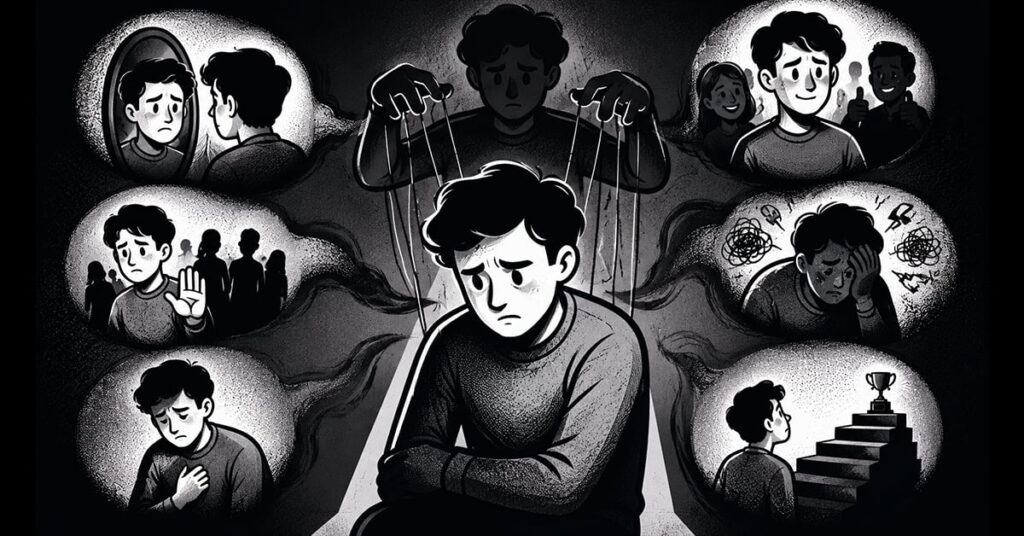
When people hear the term low self-esteem, most imagine someone who dislikes their appearance, avoids mirrors, or shows insecurity in an obvious way. But the truth is, low self-esteem rarely shows up so clearly.
It often hides behind behaviors that seem normal in everyday life. It can appear in the constant need to please others, the habit of comparing yourself, the difficulty of accepting compliments, or that inner voice that turns every small mistake into a major failure. Many people spend years living with these patterns without realizing they all come from the same place.
What makes it even more subtle is that low self-esteem does not always stop someone from working, studying, building relationships, or reaching goals. In many cases, it quietly follows the person while they continue with life. On the outside, everything seems to be working. On the inside, however, there is a persistent feeling of inadequacy, as if something is always missing.
That is exactly why so many people take so long to recognize the problem. They believe low self-esteem is only about appearance or shyness, when in reality it influences the way we see our own worth, our abilities, and even what we believe we deserve from life.
The question is not only how you see yourself in the mirror. The real question is: how do you treat yourself when no one is watching? How do you speak to yourself after a mistake? How much do you depend on other people’s approval to feel okay? How many opportunities have you let pass because you believed you were not capable?
The answers to these questions reveal far more about your self-esteem than any reflection ever could.
In this article, you will discover some of the quietest and most overlooked signs of low self-esteem. Signs that many people mistake for personality traits, common habits, or simply part of who they are. And maybe, as you recognize some of them in your own life, you will realize that the problem was never a lack of ability, but the way you learned to see yourself.
The First Sign: You Never Feel Like You’re Enough

There is a feeling that follows many people for years without them being able to clearly identify it. It is like a quiet voice that keeps repeating that something is still missing. No matter how much you try, learn, or achieve, it always feels like there is another level you must reach before you can finally feel satisfied with yourself.
At first glance, this may look like ambition. After all, wanting to grow is a positive thing. The problem begins when the feeling of not being enough never goes away.
You reach a goal and feel proud for a few moments. Maybe you get a promotion, finish an important project, improve your financial situation, or achieve a dream that once seemed far away. But soon after, that satisfaction begins to fade. Instead of recognizing how far you have come, your attention immediately turns to what is still missing.
Your mind creates a new goal. Then another. And another.
The result is that you begin living in a constant search for validation, believing the next achievement will finally bring the sense of worth you are looking for. But it never arrives in a lasting way.
People with healthy self-esteem usually see their achievements as evidence of growth. People with low self-esteem, on the other hand, often see their achievements as obligations. They do not think, “I did it.” They think, “I only did what I was supposed to do.”
That is why they rarely celebrate their progress. They always find a way to minimize their results.
If they get a high grade, they believe they were lucky. If they receive a compliment, they think the person is exaggerating. If they achieve an important goal, they immediately think they could have done better.
Nothing feels like enough.
This pattern creates an emptiness that is hard to explain. Not because the person has no accomplishments, but because they never allow those accomplishments to change the way they see themselves.
It is like trying to fill a container that has a small leak at the bottom. No matter how many new achievements are poured in, the feeling of worth escapes before it can be absorbed.
Over time, life becomes a race with no finish line. Happiness is constantly postponed into the future. “When I get that, I’ll feel better.” “When I reach this goal, I’ll feel fulfilled.” “When I am recognized, I will finally believe in myself.”
But when the moment comes, the mind moves the finish line once again.
The goal always moves farther away.
The danger of this behavior is that it makes the person believe the problem is a lack of results, when often the real problem is the inability to recognize their own worth regardless of results.
Because the truth is, no external achievement can fill an insecurity that begins inside us. If you believe you will only have value once you reach a certain standard, you will always find an even higher standard to chase.
And this may be one of the clearest signs of low self-esteem: living as if you are forever in debt to yourself, as if you must prove your worth every day, without ever feeling that the proof was enough.
The Second Sign: You Compare Yourself More Than You Realize

Very few people wake up in the morning consciously thinking, “Today I’m going to compare myself to others.” And yet, this process happens so automatically that it often goes unnoticed.
You see someone achieving something you have not achieved yet and, without realizing it, you feel uncomfortable. You come across someone who seems more attractive, more intelligent, or more successful, and immediately start evaluating your own life. It is not an obvious comparison. It is quiet. Almost invisible. But its effects run deep.
The problem is not admiring other people or using examples as inspiration. The problem begins when other people’s lives become the standard you use to measure your own worth.
Suddenly, an achievement that once felt important no longer feels like enough because someone else achieved more. A goal you reached loses its shine because someone else went further. What should have brought satisfaction starts creating the feeling that you are behind.
Constant comparison creates a dangerous trap: you stop looking at your own path and begin judging your life based on realities you often do not truly know.
Social media has amplified this like never before. In just a few minutes, you can watch dozens of people showing trips, happy relationships, professional achievements, physical transformations, and seemingly perfect moments. The brain receives a flood of carefully selected information, but often forgets one important detail: people do not post their failures as often as they post their successes.
You know your own insecurities, fears, and struggles, but you only see the highlights of other people’s lives. It is an unfair comparison from the beginning. Still, millions of people do it every day.
Over time, this dynamic creates a constant sense of insufficiency. No matter how much you grow, there will always be someone making more money, gaining more recognition, traveling more, appearing happier, or achieving more impressive results.
Low self-esteem feeds exactly on this logic. It makes you believe your worth depends on where you stand compared to others. If someone seems ahead of you, you feel smaller. If someone seems to be doing better, you feel like you are failing.
But there is a question people rarely ask: when did life become a permanent competition?
Every person carries a different story, different opportunities, different challenges, and completely different starting points. Comparing your journey to someone else’s is like comparing different chapters from different books and expecting them to make sense.
Those who constantly compare themselves end up giving other people the power to define their self-esteem. Their happiness begins to depend on someone else’s performance. Their sense of worth rises and falls according to what they see around them.
And this is one of the quietest signs of low self-esteem: when you stop using your own standards to evaluate your life and begin seeing yourself through someone else’s ruler.
Because deep down, constant comparison never reveals who you are. It only makes you forget who you could become if you were focused on your own path.
The Third Sign: You Struggle to Accept Compliments

Imagine this situation: someone compliments your work, recognizes one of your qualities, or points out something you did well. Instead of simply saying thank you, your immediate reaction is to find a way to downplay the compliment.
- It was nothing special.
- Anyone could have done it.
- I just got lucky.
- You’re exaggerating.
If these responses sound familiar, there may be more going on than simple humility.
Many people believe rejecting compliments is a sign of modesty, but in some cases, this difficulty reveals a fragile sense of self-worth. After all, when someone recognizes something good in you and you automatically try to invalidate it, what you are truly rejecting is not the compliment itself, but the possibility of believing it.
A person with low self-esteem often carries a very critical inner image of themselves. And when they receive a compliment, a conflict appears. On one side, there is the positive perception another person has of them. On the other, there is the negative story they have built about themselves over the years.
Since the two do not match, the mind tries to resolve the contradiction in the easiest way: by dismissing the compliment.
That is why some people can hear dozens of positive comments and still spend hours thinking about one single criticism. Compliments go in one ear and out the other, while flaws seem to find a permanent home in the mind.
This pattern causes the person to develop a distorted view of themselves. They become experts at identifying flaws, but almost incapable of recognizing their own qualities.
When they look at an achievement, they see everything they could have done better. When they receive recognition, they believe people simply do not know their flaws well enough. When someone shows admiration, they assume the person is just being kind or exaggerating.
The result is that no compliment seems powerful enough to change the way they see themselves.
Interestingly, many of these people do the exact opposite with their mistakes. While they minimize their qualities, they magnify their flaws. A small success is treated as ordinary. A small mistake is treated as proof of incompetence.
Over time, this habit creates a kind of mental filter. Anything that confirms their insecurities is accepted quickly. Anything that contradicts those insecurities is questioned, ignored, or rejected.
But there is an important question worth reflecting on: if you trust your ability to see your flaws so much, why do you distrust it so deeply when someone else sees your strengths?
Maybe the difficulty in accepting compliments has less to do with other people’s sincerity and more to do with how used you have become to seeing yourself through the lens of criticism.
And when that happens, it does not matter how much recognition you receive. There will always be a part of you searching for reasons to believe it is not real.
This is one of the quietest signs of low self-esteem: the inability to see in yourself what others can see clearly.
The Fourth Sign: You Keep Trying to Please Everyone

Being kind, polite, and considerate are admirable qualities. The problem begins when pleasing others stops being a choice and becomes a need.
Many people spend their entire lives trying to avoid conflict, disappointment, and rejection. They say “yes” when they want to say “no.” They agree with opinions they do not share. They take on responsibilities they should not carry. All to avoid the discomfort of disappointing someone.
At first glance, this behavior may look like kindness. But in many cases, there is something deeper behind it.
Someone with healthy self-esteem understands they will not be loved, approved of, or understood by everyone. And that is okay. Someone with fragile self-esteem, however, often connects other people’s approval to their own worth. As a result, any sign of disapproval can feel like a threat.
The fear is not just creating conflict. The real fear is no longer being accepted.
That is why these people often monitor the reactions around them constantly. They pay excessive attention to what others think, feel, or expect from them. Many times, they adapt their behavior to meet other people’s expectations, even when it means ignoring their own needs.
Over time, setting boundaries becomes extremely difficult.
- Saying “no” starts to create guilt.
- Expressing a different opinion creates anxiety.
- Prioritizing yourself feels selfish.
The person becomes so used to meeting other people’s expectations that they lose touch with what they truly want.
The irony is that the more they try to please everyone, the farther they move away from themselves.
This happens because living for other people’s approval is an impossible battle to win. People’s expectations are different, constantly changing, and often conflicting. Trying to satisfy all of them is like chasing a target that never stops moving.
Besides, the approval gained this way is usually temporary. It produces momentary relief, but it does not heal the insecurity behind the behavior. Soon, a new situation appears, a new person needs to be pleased, and a new need for validation begins.
The search for approval becomes a cycle.
- You please others to be accepted.
- You feel accepted for a moment.
- You feel better temporarily.
- Then you need more approval again.
- And everything starts over.
The truth is that no one can build solid self-esteem while depending entirely on other people’s opinions. After all, when your worth is in someone else’s hands, any criticism, rejection, or disapproval has the power to shake your sense of self.
Maybe that is why one of the hardest questions for someone who keeps trying to please everyone is this: who would you be if you stopped living to meet other people’s expectations?
Because low self-esteem does not always show itself through visible insecurity. Sometimes it shows up in the inability to disappoint someone, even when the price is disappointing yourself.
And this is one of the quietest signs of all: when the need to be accepted by others becomes greater than the need to stay true to who you really are.
The Fifth Sign: You Are Your Own Harshest Critic

Imagine for a moment that a friend makes a mistake. Maybe they failed at a project, made a poor decision, or went through a difficult moment. How would you speak to that person?
You would probably try to understand them. You would say mistakes are part of life. You would remind them that one failure does not define who they are. Maybe you would even point out their strengths and achievements to help them regain confidence.
Now think about how you speak to yourself when you make a mistake.
For many people with low self-esteem, the difference is huge.
What would be met with compassion in someone else is met with harshness when it happens to them. A small mistake becomes proof of incompetence. A temporary failure becomes evidence of inability. A result below expectations becomes confirmation of every insecurity that was already there.
It is as if there is an inner voice constantly watching, judging, and pointing out flaws.
A voice that rarely acknowledges what went right, but never misses what went wrong.
While compliments are questioned, criticism is absorbed quickly. While achievements are minimized, failures are magnified. Little by little, the person becomes their own judge, prosecutor, and executioner.
The problem is that excessive self-criticism often disguises itself as something positive.
Many people believe they are simply demanding with themselves. They say constant pressure keeps them motivated or helps them improve. But there is a huge difference between wanting to grow and living in a permanent state of self-accusation.
Someone who wants to grow recognizes mistakes in order to learn from them.
Someone trapped in constant self-criticism uses mistakes to attack their own identity.
It is no longer:
- I made a mistake. It becomes: I am a failure.
It is no longer:
- This did not work out. It becomes: I never do anything right.
This shift may seem small, but its effects are deep. After all, when every failure is interpreted as a reflection of your personal worth, life becomes an impossible test to pass.
What is most striking is that this critical voice would rarely be used with anyone else.
Few people would speak to a friend the way they speak to themselves. Few would say to someone they love the same harsh phrases they repeat every day inside their own mind.
And yet, many people consider it normal to live with this internal dialogue.
Over time, constant self-criticism wears down confidence, increases insecurity, and reinforces the feeling of not being enough. The person stops seeing their abilities because they are too busy looking for their flaws.
They believe they are being realistic, when in reality they are looking at themselves through a distorted lens.
This does not mean ignoring mistakes or pretending they do not exist. Recognizing flaws is necessary for growth. The problem begins when mistakes receive all the attention and qualities are systematically ignored.
Because no one builds healthy self-esteem while living under constant attack from their own mind.
Maybe one of the most important reflections is this: if you spent an entire day listening to someone speak to you the same way you speak to yourself, would you enjoy that person’s company?
If the answer is no, maybe it is time to realize that your harshest critic is not the world around you.
It is the voice you carry inside yourself.
And as long as that voice keeps turning small mistakes into major failures, it will be hard to see your own reality clearly. After all, those who are always searching for flaws often forget to notice everything that also deserves to be valued.
You Accept Less Than You Deserve

One of the quietest effects of low self-esteem is not only found in how you see yourself, but in what you begin to accept.
When a person does not fully recognize their own worth, they often begin to believe they should settle for less. Less respect. Less recognition. Fewer opportunities. Less happiness.
And the most dangerous part is that this rarely happens all at once.
No one wakes up in the morning and decides to accept being mistreated, ignored, or undervalued. This process is usually gradual. Small concessions are made here and there. A boundary is ignored. A disrespectful behavior is tolerated. A personal need is pushed aside to avoid conflict.
Over time, what should be unacceptable starts to feel normal.
The person gets used to staying in environments that harm them. They accept relationships where they receive far less than they give. They remain in situations that no longer bring growth or happiness. Not because they are truly satisfied, but because on some level, they believe they do not deserve anything better.
Low self-esteem has a peculiar way of distorting reality. It does not only make you doubt your abilities. It also lowers your expectations about what you believe you deserve from life.
That is why many people remain for years in situations that hurt them.
Not because they do not see the problem.
But because they do not believe they have enough value to look for something different.
This mindset also appears in the difficulty of setting boundaries.
- Saying “this is not okay” feels uncomfortable.
- Expressing needs creates guilt.
- Defending your own interests feels selfish.
As a result, the person learns to tolerate more than they should.
- They tolerate disrespectful comments.
- They tolerate unbalanced relationships.
- They tolerate emotional burdens that are not theirs to carry.
- They tolerate situations they know, deep down, they should not accept.
And every time they ignore their own boundaries, they send themselves a quiet message: your needs are less important.
Over time, that message grows stronger.
Until the idea of asking for more respect, more reciprocity, or more recognition starts to feel excessive.
But here is an important truth: people with low self-esteem often confuse dignity with being demanding.
- They believe asking for respect is asking for too much.
- That setting boundaries means being difficult.
- That wanting something better means being ungrateful.
When in reality, all of this is part of having a healthy relationship with yourself.
The issue is not wanting privileges or special treatment. The issue is recognizing that you do not have to accept just anything in order to be accepted, loved, or allowed to belong somewhere.
Because there is a huge difference between being humble and believing you deserve less.
Humility recognizes that no one is superior to others.
Low self-esteem makes you believe you are inferior.
And when that belief takes root, it begins to influence every choice in your life.
Maybe that is why one of the hardest questions is also one of the most revealing: if you truly believed in your own worth, what would you stop accepting today?
The answer may reveal more about your self-esteem than any test or diagnosis.
Because often, low self-esteem does not appear only in negative thoughts. It appears in the situations you tolerate, the boundaries you do not set, and the opportunities you do not pursue because deep down, you believe you do not deserve anything better.
And this is one of the most painful signs of all: when you begin to live a smaller life than you could, not because you lack ability, but because you have forgotten your own worth.
What Do All These Signs Have in Common?

Throughout this article, you have seen different signs of low self-esteem. Some appear in constant comparison with other people. Others show up in the difficulty of accepting compliments, the need to please everyone, excessive self-criticism, or the tendency to accept less than you deserve.
Although these behaviors may seem different, they all share the same root.
Most people believe these problems happen because something is missing in them. Confidence is missing. Ability is missing. Intelligence is missing. Discipline is missing. Courage is missing.
But in most cases, that is not the real issue.
The root of low self-esteem is rarely incapacity. It is the way a person interprets themselves.
Two people can go through the exact same situation and come to completely different conclusions. One receives criticism and thinks, “I can learn from this.” The other receives the same criticism and concludes, “This proves I’m not good enough.”
One makes a mistake and understands they failed at a specific task. The other turns the mistake into a definition of who they are.
The difference is not necessarily in what happened.
It is in the meaning each person gives to what happened.
That is exactly where low self-esteem grows stronger. It creates a distorted perception of personal worth. The person begins to see their flaws with extreme clarity, while their qualities become harder and harder to recognize.
Little by little, this view influences everything.
- It influences the choices they make.
- The opportunities they accept.
- The relationships they tolerate.
- The dreams they pursue.
- And even the way they speak to themselves.
The problem is that when this distorted perception remains for too long, it begins to feel like reality. The person stops questioning their thoughts and starts treating them as facts.
- If they believe they are not good enough, they begin to act like someone who is not good enough.
- If they believe they do not deserve better, they begin to accept less.
- If they believe they will never be capable, they avoid challenges that could prove the opposite.
Without realizing it, they build a life based on conclusions that may never have been true.
That is why many people spend years trying to fix entire areas of their lives without getting the result they are looking for. They change jobs, seek more recognition, try to please more people, set new goals, and collect new achievements.
But the feeling of not being enough remains.
Not because they are doing something wrong.
But because the problem is not only in what happens around them. It is in the way they interpret who they are.
As long as their sense of worth remains distorted, even their most important achievements will struggle to fill the emptiness. After all, everything positive ends up minimized, while everything negative receives twice as much attention.
And that is exactly why signs that seem different all point to the same place.
Not to a lack of ability.
But to a difficulty recognizing your own worth in a balanced and realistic way.
Conclusion
When we think about low self-esteem, it is common to imagine someone who shows insecurity in an obvious way. Someone who avoids attention, does not believe in themselves, or constantly puts themselves down in front of others.
But reality is often much quieter than that.
Low self-esteem rarely screams. Most of the time, it hides in behaviors so common that they go unnoticed for years. It appears when you believe you are never good enough. When you constantly compare yourself to others. When you struggle to accept compliments. When you need outside approval to feel valued. When you criticize yourself with a harshness you would never use with another person. Or when you accept situations that, deep down, you know you should not accept.
That is why identifying these signs is so important.
Many people spend a large part of their lives trying to understand why they feel stuck, dissatisfied, or constantly not enough, without realizing there is an invisible pattern influencing their thoughts, decisions, and behaviors.
The good news is that what can be identified can also be transformed.
Recognizing these signs does not mean labeling or judging yourself. It means developing awareness. And every real change begins exactly there. After all, it is difficult to change something that remains hidden.
Maybe you recognized yourself in only one of the signs presented in this article. Maybe you recognized several. Either way, the most important thing to remember is that these behaviors do not define who you are. They only reveal ways of thinking and acting that were built over time.
And anything that was built can also be rebuilt.
Self-esteem does not change overnight. It grows stronger little by little, through the way you treat yourself, the choices you make, and the way you learn to see yourself with more balance and honesty.
But there is an even deeper question.
Where do these beliefs come from — the ones that make someone feel inadequate even when they have qualities, achievements, and potential? Why do some people develop such a critical view of themselves that they turn small flaws into proof of incapacity?
Often, the answer lies beyond what we consciously notice. Beliefs, interpretations, and emotional patterns can remain stored in the mind for years, influencing our decisions, our behavior, and the way we see reality without us even realizing it.
If you want to better understand how these beliefs are formed and how they can influence your entire life, it is worth continuing with our next article:
➡️How the Subconscious Mind Influences Your Life and Shapes Your Reality