🎧 Audio Version of This Article
introduction
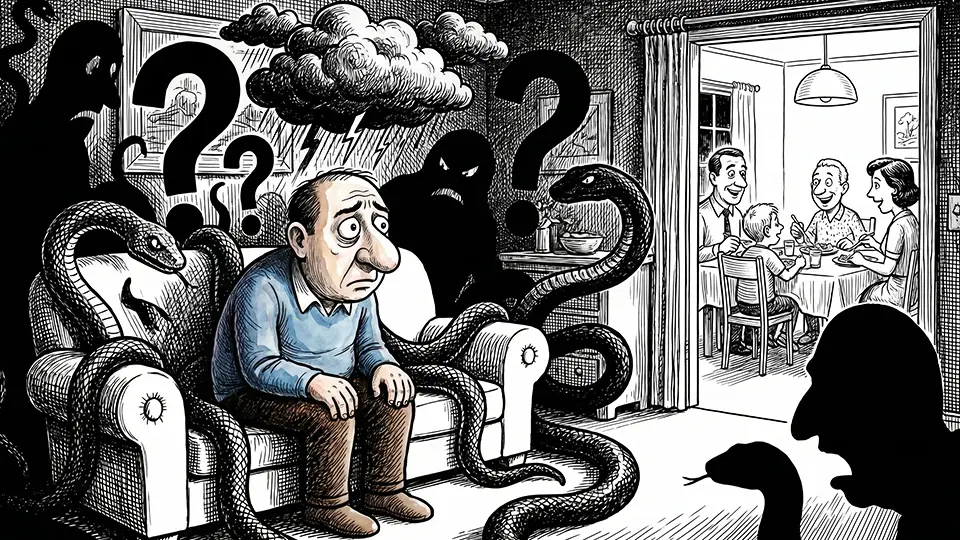
You lie down in bed after a long, exhausting day. Your body is ready to rest, but your mind seems to have other plans.
Suddenly, you start worrying about a bill that’s due next week. Then your mind drifts to a conversation you had earlier, and you begin wondering whether you said something wrong. Before long, fears about work, your relationship, or someone in your family start creeping in.
The strange thing is that, most of the time, nothing bad has actually happened.
Yet that doesn’t stop your mind from acting as if a problem is just around the corner.
Anyone who has never experienced this probably underestimates how exhausting it can be. After all, it’s not just a matter of overthinking. Anxiety has the power to turn possibilities into certainties, doubts into threats, and small problems into situations that feel overwhelming.
Still, there’s something important to understand: feeling anxious is not a flaw, nor is it a sign of weakness.
Think about a job interview. An important exam. Waiting for medical test results. Sending the first message to someone you like. In situations like these, feeling nervous is completely normal. Anxiety is part of how human beings are wired, and throughout history it helped our ancestors recognize danger and prepare to take action.
The problem begins when this mechanism stops appearing only in specific situations and becomes part of everyday life.
Worry no longer has a clear reason. Rest no longer feels restful. Weekends bring little relief. Even moments that should feel peaceful are accompanied by a difficult-to-explain sensation, as though something is not quite right.
Many people live with this for years without fully understanding what’s happening. Some believe they’re simply chronic worriers. Others assume it’s just part of their personality. And some never realize that many of the physical and emotional symptoms they experience every day may actually be connected to anxiety.
That’s why, before discussing treatments or ways to manage it, it’s important to understand what anxiety really is.
Throughout this article, you’ll discover why anxiety exists, when it stops being a normal response, how it affects both the body and the mind, and what causes may be behind this condition that impacts millions of people around the world.
When Does Anxiety Stop Being Normal?
Imagine that tomorrow you have a job interview that could change your life.
It’s natural to feel nervous. You might mentally rehearse a few answers before going to sleep. You might wake up a little earlier than usual. Your body and mind recognize that the situation is important and begin preparing for it.
That’s anxiety.
Now imagine a different situation.
The interview took place two weeks ago. You received good news. Everything worked out.
And yet, you’re still worried.
You start thinking about the mistakes you might make at your new job. Then you wonder if you’re really good enough. Soon, the fear of being fired appears. And before long, your mind finds yet another reason to worry.
Do you see the difference?
Normal anxiety is usually connected to a specific situation. It shows up when you’re facing a challenge, an important decision, or some kind of uncertainty. Once that situation passes, anxiety tends to fade as well.
Excessive anxiety works differently.
It doesn’t need a real problem to exist. Many times, the mere possibility that something could go wrong is enough to put the mind on high alert.
What’s interesting is that, for the person experiencing it, those worries almost always seem reasonable.
After all, who hasn’t thought:
“I’m just trying to be prepared.”
“I’m just being cautious.”
“I’m just trying to avoid problems.”
But there’s a difference between preparing for a situation and constantly expecting something bad to happen.
That’s the point where anxiety begins to stop being a normal emotion and starts interfering with your quality of life.
Many people first notice this through small changes in their daily routine.
They struggle to relax during their free time.
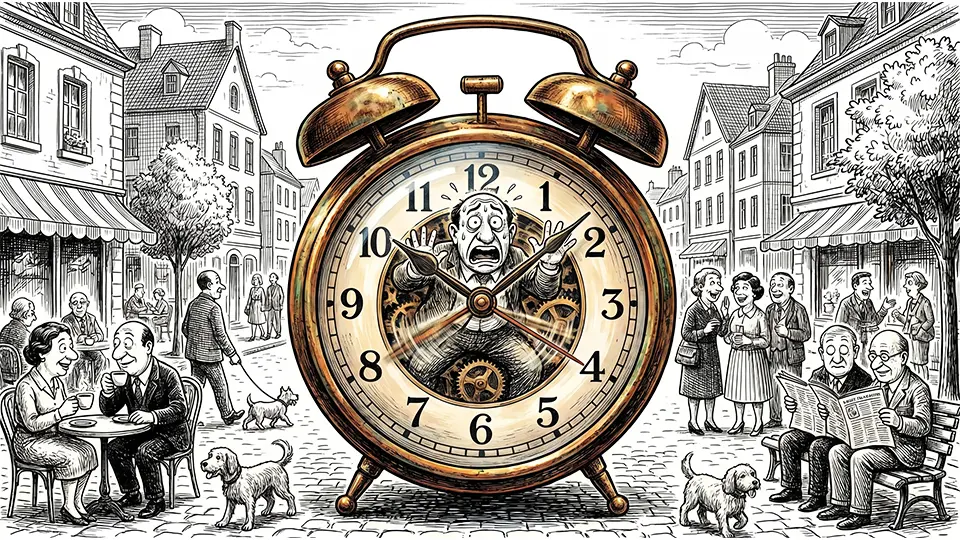
They can’t fully enjoy a family dinner because they’re thinking about problems at work.
They watch a movie, but their mind remains trapped in worries about things that might happen days or weeks from now.
Even when everything is going well, the feeling of alertness remains.
It’s like an alarm that keeps ringing even when there’s no smoke.
Over time, this constant state of worry can affect many areas of life.
Sleep becomes less restorative.
Concentration declines.
Relationships become more strained.
Simple tasks begin to feel more difficult than they actually are.
And perhaps the most frustrating part is that many people know they’re exaggerating certain worries, yet they can’t simply switch those thoughts off.
Those who have never experienced intense anxiety often believe it’s as simple as “stopping yourself from thinking about it.”
In reality, that’s not how it works.
A person doesn’t choose to feel anxious any more than they choose to feel pain when touching something hot.
The brain detects a threat, and the body reacts.
That’s why one of the clearest signs that anxiety is crossing the line from normal to unhealthy is when it begins controlling your decisions, your thoughts, and your daily life.
You’re no longer managing the worry.
The worry is managing you.
And when that happens, it’s worth paying attention to the signals your mind and body are trying to send.
How Does Anxiety Affect the Body and Mind?
One of the biggest challenges in recognizing anxiety is that it doesn’t always look the way people expect.
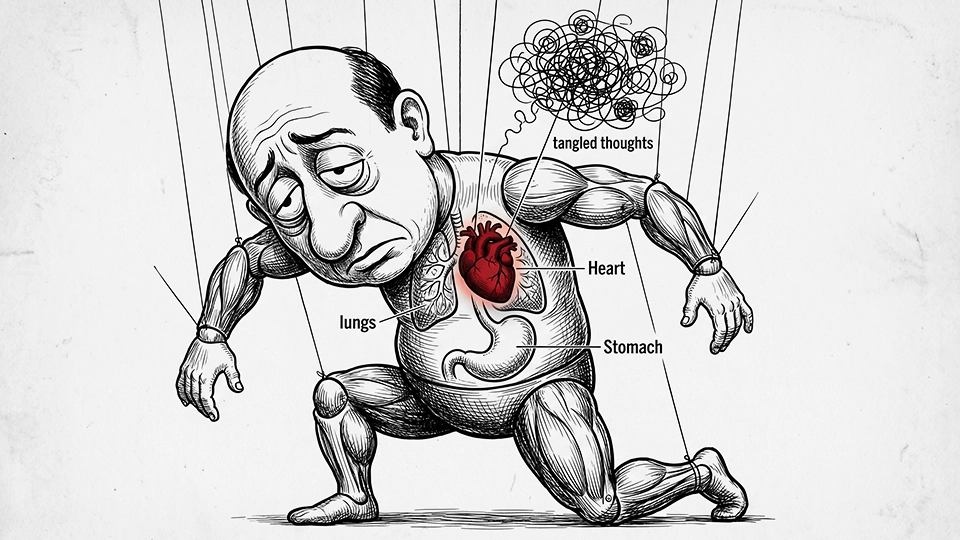
Many people assume anxiety simply means feeling worried or nervous. In reality, it can show up in many different ways. Sometimes people clearly recognize that they’re anxious. Other times, they feel the physical effects without ever connecting those symptoms to anxiety.
This happens because anxiety affects more than just our thoughts. It involves emotions, physical sensations, and even the way we interpret the world around us.
Emotional Symptoms
Emotional symptoms are often the first to appear, although they aren’t always the easiest to recognize.
Excessive worry is one of the most common signs. The mind seems to be constantly searching for something to solve, anticipate, or control. When one problem disappears, another quickly takes its place.
It’s also common to experience fear without a clearly defined reason. This isn’t the same as a specific fear, such as a fear of heights or driving. It’s a broader feeling, as though something could go wrong at any moment.
Another frequent symptom is irritability. Small situations that would normally go unnoticed begin to feel much more frustrating than they should. A delay, a criticism, or a minor setback can trigger stronger reactions than usual.
Many people also describe a constant sense of restlessness. Even when they’re sitting down or trying to relax, it feels as if there’s an internal pressure telling them they should be doing something or solving some problem.
Physical Symptoms
Anxiety also speaks through the body.
Anyone who has experienced intense nervousness is probably familiar with some of these reactions. The heart races. The hands become cold or sweaty. Breathing changes rhythm.
What many people don’t realize is that these symptoms can appear even when there’s no real danger in front of them.
This happens because the brain perceives a threat and sends signals that prepare the body to take action. The body enters a state of alert, even when the “danger” exists only in the form of a thought.
Some of the most common physical symptoms include a racing heart, muscle tension, chest tightness, shortness of breath, excessive sweating, trembling, and digestive discomfort.
Some people experience stomach pain before important events. Others develop frequent headaches or notice ongoing tension in their shoulders, neck, and jaw.
It’s not unusual for someone to visit multiple doctors, believing they have a serious physical illness, before discovering that many of those symptoms are actually linked to anxiety.
Cognitive Symptoms
There’s also a third group of symptoms that receives less attention but can be extremely exhausting: cognitive symptoms.
In other words, these are the effects anxiety has on the way we think.
A very common example is difficulty concentrating. Someone tries to read a page of a book and realizes they haven’t absorbed anything. They watch a video and, just a few minutes later, can’t remember what they just heard.
This happens because the mind is too busy monitoring worries and potential problems.
Another common symptom is an overload of thoughts. The mind seems to run nonstop. One worry leads to another, which leads to another, creating a chain that’s difficult to break.
It’s also common to repeatedly imagine negative scenarios. A simple unanswered message can generate dozens of different interpretations. A meeting scheduled for next week can turn into hours of anticipatory worry.
The interesting thing is that most of these scenarios never actually happen. Yet they still trigger very real emotions and physical reactions.
That’s why anxiety is often much more than a state of worry. It can affect how we feel, how we think, and even how our bodies respond to everyday life.
And it’s precisely this combination of emotional, physical, and cognitive symptoms that makes anxiety so exhausting for those who live with it.
Why Do We Feel Anxiety?
After learning about the symptoms of anxiety, a question naturally comes to mind:
If anxiety causes so much suffering, why does it exist?
The answer may surprise you.
Anxiety wasn’t created to harm us. In fact, it evolved to protect us.
Imagine someone crossing a busy street. The moment they notice a car speeding toward them, their body reacts almost instantly. Their heart races, their muscles tense up, and their attention becomes completely focused on the situation.
No one needs to consciously think through each of these reactions. The brain handles them automatically because its primary mission is to keep you alive.
In many ways, anxiety functions as an internal protection system. It exists to identify potential risks and prepare the body to respond before a problem occurs.
Throughout human history, this was essential for survival.
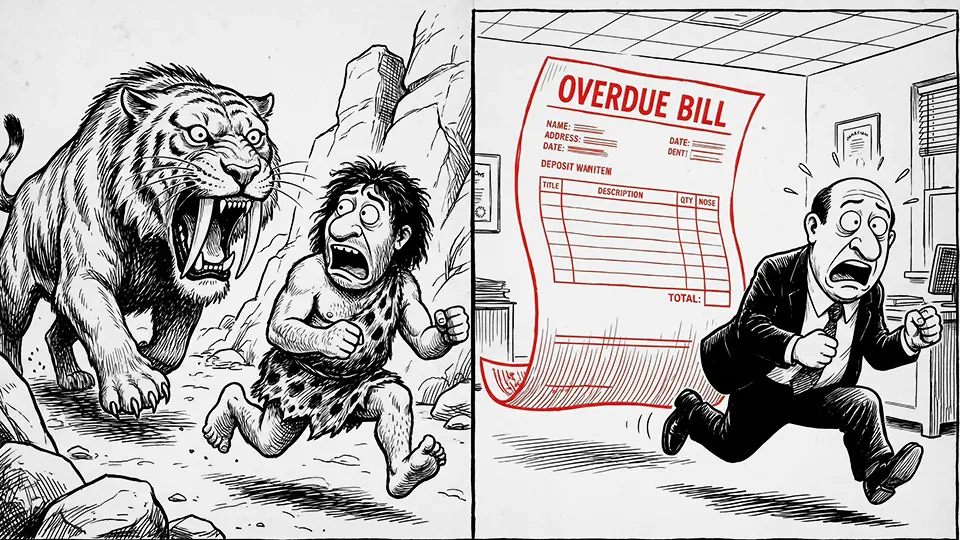
Imagine our ancestors living in environments far more dangerous than the ones we live in today. A strange sound coming from the bushes could mean a predator was nearby. An unfamiliar path could hide threats. In many cases, those who detected danger more quickly had a better chance of surviving.
That’s why the human brain evolved an incredibly efficient alert system.
The problem is that the world changed much faster than the brain did.
Today, most people don’t need to flee from wild animals or face constant dangers in nature. Yet the survival mechanism still operates in much the same way.
The difference is that modern threats look different.
They may take the form of debt, a job interview, relationship difficulties, the possibility of losing a job, or concerns about someone in the family.
To the brain, all of these situations involve some degree of uncertainty. And uncertainty is something the brain doesn’t particularly like.
The brain prefers predictability. It wants to know what will happen, when it will happen, and how it should respond. When it doesn’t have those answers, it begins working overtime to anticipate possible outcomes.
That’s exactly where anxiety comes into play.
It keeps asking questions.
“What if I lose my job?”
“What if something goes wrong?”
“What if I can’t solve this problem?”
“What if the worst happens?”
To a certain extent, this is useful. Thinking about the future helps us plan, avoid mistakes, and make better decisions.
The problem begins when this ability to anticipate starts operating without limits.
There’s an interesting detail about the human brain: it doesn’t always react to facts alone. Quite often, it reacts to the interpretations we create about those facts.
And yet, the brain keeps making comparisons.
Those comparisons can create a constant feeling of inadequacy.
The sense that everyone else is moving forward while you’re falling behind has become an increasingly common source of anxiety.
Uncertainty
Few things make the brain more uncomfortable than not knowing what will happen next.
Will I be able to pay my bills?
Will my relationship work out?
Will I be able to keep my job?
Did I make the right choice?
These are questions that are part of almost every human life.
The problem begins when the need for answers becomes so intense that any uncertainty is interpreted as a threat.
The truth is that no one has complete control over the future. But an anxious mind often behaves as if it needs to predict everything in order to feel safe.
Information Overload
Think about what life was like just a few decades ago.
People watched the news at certain times of the day and then moved on with their lives.
Today, information reaches us constantly.
- Notifications.
- Messages.
- Videos.
- News.
- Emails.
- Alerts.
- Opinions.
- Arguments and debates.
Smartphones have placed the entire world inside our pockets.
This has brought countless advantages, but it has also created a problem: the brain rarely gets a chance to rest.
Many people wake up checking the news and go to bed consuming even more information.
The result is a constantly stimulated mind, processing worries, problems, and potential threats from every direction.
Lifestyle Habits
Not all anxiety is born from major life events.
Sometimes it’s also influenced by habits that seem harmless at first glance.
Poor sleep, for example, directly affects areas of the brain responsible for emotional regulation.
Too much caffeine can increase symptoms such as restlessness, a racing heart, and nervousness.
A lack of physical activity reduces one of the body’s natural mechanisms for coping with stress.
In addition, unbalanced routines, exhausting work schedules, and a lack of time for recovery can contribute to keeping the body in a constant state of alertness.
That’s why anxiety rarely has a single cause.
It is often the result of several factors working together. For some people, genetics plays a larger role. For others, stress, past experiences, or lifestyle habits have a greater influence.
Understanding these causes isn’t about finding someone or something to blame. It’s about gaining a better understanding of the mechanisms that may be fueling anxiety and why it manifests so differently from one person to another.
Who Is More Likely to Develop Anxiety?
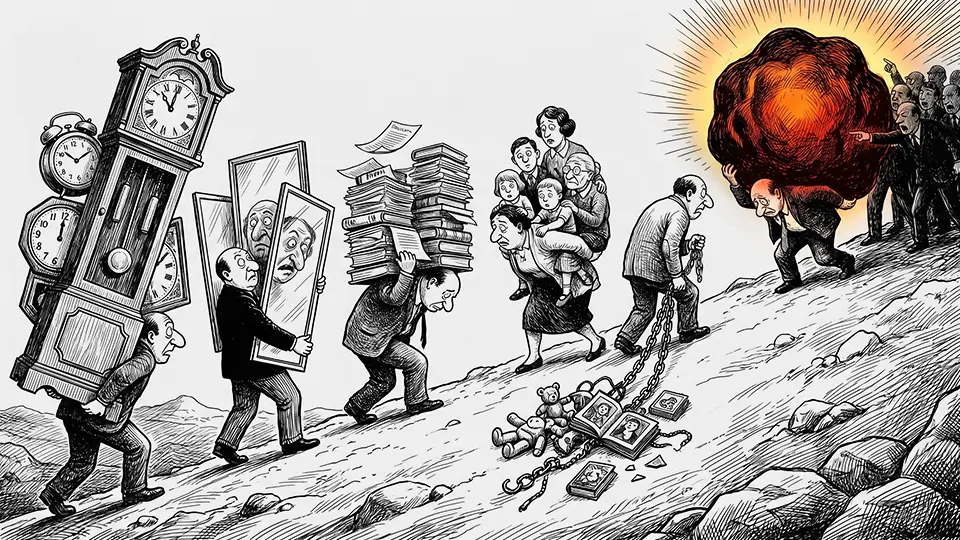
Anxiety can affect anyone.
Age, profession, financial situation, and level of education don’t provide immunity. At some point in life, nearly everyone experiences periods of worry, fear, or uncertainty.
However, some people have factors that increase the likelihood of developing anxiety in a more intense or persistent way.
That doesn’t necessarily mean they will develop an anxiety disorder. It simply means they may be more vulnerable to it.
People With a Family History of Anxiety
If you grew up in a family where parents, siblings, or close relatives struggled with anxiety, there is a greater chance that you may experience it as well.
Part of that influence is related to genetics, but genetics is only one piece of the puzzle.
The environment also plays an important role.
A child who grows up watching overly anxious adults may unconsciously learn that the world is a more dangerous place than it actually is.
That’s why genetics and environment often work together.
People Exposed to High Levels of Stress
Everyone goes through difficult periods. The problem begins when stress stops being a temporary phase and becomes a way of life.
Overworked professionals, people facing ongoing financial difficulties, caregivers looking after sick family members, and individuals living under constant pressure often face a greater risk of developing anxiety.
The human body can handle difficult situations for a while.
But when the state of alertness lasts for months or even years, the emotional wear and tear eventually takes its toll.
People Who Have Experienced Trauma
Some experiences leave deep emotional scars.
Losing someone important, surviving a serious accident, experiencing violence, abandonment, bullying, or difficult childhood experiences can alter the way the brain perceives risk and danger.
In many cases, the brain continues trying to protect the person long after the threat has disappeared.
The result can be a constant sense of vigilance and worry.
Highly Perfectionistic People
At first glance, perfectionism is often viewed as a positive trait.
But there’s a side of it that few people talk about.
People who believe they must do everything perfectly, control everything, and avoid every mistake often live under enormous pressure.
A small mistake becomes a source of guilt.
A simple criticism feels like proof of failure.
An ordinary task can generate hours of worry.
Perfectionism and anxiety frequently go hand in hand because they share a common fear: the fear that something will go wrong.
People Who Worry Excessively About What Others Think
Imagine constantly evaluating how others see you.
Do people like me?
Did I say something wrong?
Am I disappointing someone?
Am I falling behind?
When a large part of your self-worth depends on external approval, any criticism, rejection, or comparison can become a source of anxiety.
Social media has amplified this phenomenon even further, since it’s now possible to compare your life to hundreds of other people in just a few minutes.
People Going Through Major Life Changes
Even positive changes can trigger anxiety.
Starting a new job.
Moving to a new city.
Entering a new relationship.
Getting married.
Having children.
Starting college.
Launching a business.
All of these situations have one thing in common: they involve uncertainty.
And as we’ve already seen, uncertainty is one of the most powerful triggers of anxiety.
An Important Factor Most People Overlook
There’s a common belief that anxious people are fragile or unable to handle life’s challenges.
In reality, the opposite is often true.
It’s common to find highly responsible, dedicated, careful, and committed people struggling with anxiety.
They worry because they care.
They plan because they want to do their best.
They take responsibility because they genuinely want things to work out.
The problem begins when that concern goes beyond healthy limits and becomes a constant source of suffering.
That’s why developing anxiety doesn’t mean you’re weak, incapable, or emotionally unstable.
It simply means that certain biological, emotional, or environmental factors have increased the sensitivity of your internal alarm system.
And the more risk factors a person accumulates throughout life, the greater the likelihood that anxiety may become a constant presence in their daily routine.
Why Is Anxiety Becoming More Common?
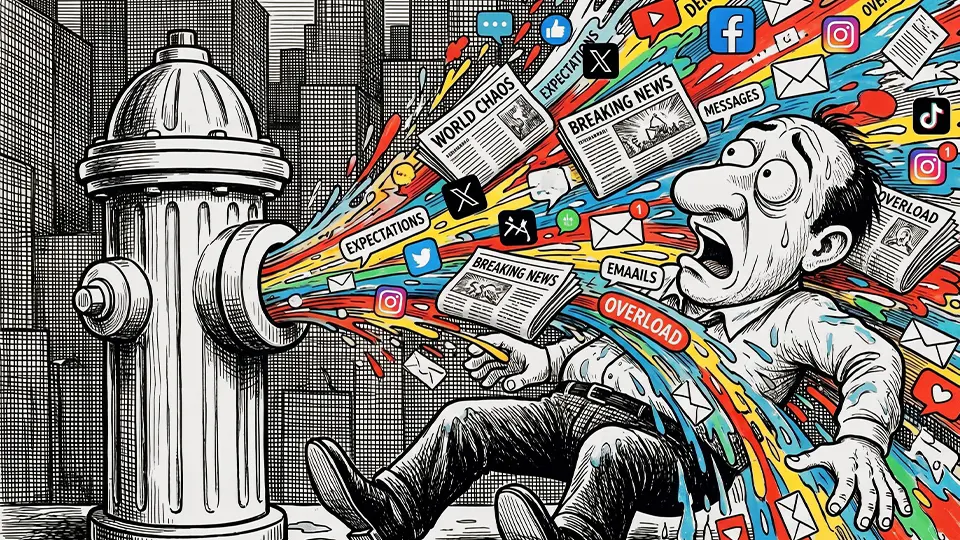
If you talk to people from different generations, you’ll probably hear the same observation:
“It seems like everyone is anxious these days.”
While that statement may sound exaggerated, there’s a reason so many people feel this way.
Anxiety has always existed. Our grandparents experienced anxiety. Our great-grandparents did too. What has changed is the environment we live in.
Think about what an average day looked like a few decades ago.
Most people went to work, handled their responsibilities, and returned home. News arrived at specific times of the day. Social comparisons were largely limited to the people around them. When the workday ended, work generally stayed at work.
Today, reality looks very different.
Smartphones have turned the entire world into something we carry in our pockets.
Before even getting out of bed, many people check messages, emails, news, and social media. Within minutes, they’re exposed to economic concerns, international conflicts, tragedies, professional pressures, and hundreds of pieces of information that may have nothing to do with their own lives.
The human brain was never designed to handle such an enormous volume of stimulation.
And that comes at a cost.
We’re Always Connected
Think about how many times you pick up your phone throughout the day.
Often, it happens without you even realizing it.
A message arrives.
A notification appears.
Someone shares an update.
Breaking news pops up.
As soon as one piece of information ends, another is already waiting.
The problem isn’t just the amount of content. It’s the difficulty of finding moments of mental rest.
In the past, worries were usually confined to the environment where they existed.
Today, work follows you home. News follows you to bed. Social media follows you almost everywhere.
For a brain designed to detect threats, that means more opportunities to find reasons to worry.
The Culture of Comparison
Another factor contributing to the rise of anxiety is constant comparison.
You open social media and see someone buying a house.
Minutes later, you see someone traveling abroad.
Then another person announces a major career achievement.
The brain makes comparisons almost automatically.
The problem is that we’re comparing our real lives to the highlight reels of other people’s lives.
We rarely see the struggles, failures, insecurities, or problems hidden behind each post.
Even so, many people end the day feeling as though they’re falling behind.
That invisible pressure can create insecurity, dissatisfaction, and anxiety.
The Illusion That We Must Handle Everything
There’s also growing pressure to be productive all the time.
Work.
Study.
Take care of your health.
Keep up with the news.
Be present for your family.
Manage your finances.
Learn new skills.
Respond to messages quickly.
Solve problems.
And somehow still find time to rest.
It’s not hard to understand why so many people feel overwhelmed.
The human brain has limits, even when we try to ignore them.
When the feeling of pressure becomes constant, the state of alertness tends to rise as well.
More Information Doesn’t Always Mean More Peace of Mind
There’s a common belief that the more information we have, the safer we’ll feel.
But that’s not always true.
Someone worried about their health may spend hours researching symptoms online.
Someone worried about money may follow financial news all day long.
A person feeling insecure in a relationship may analyze every message they receive, searching for signs that something is wrong.
In our attempt to find answers, we often end up feeding the very worries we’re trying to eliminate.
It’s like trying to put out a fire by pouring gasoline on the flames.
The Paradox of Modern Life
Ironically, we live in a time with more comfort, more technology, and greater access to information than any previous generation.
Yet anxiety continues to rise.
That’s because the human brain was never designed to handle so many decisions, comparisons, stimuli, and uncertainties all at once.
Our technological capabilities have advanced at an incredible pace.
But our emotional wiring remains largely the same as it was thousands of years ago.
That’s why it’s no surprise that so many people feel mentally exhausted.
Anxiety isn’t becoming more common because people have become weaker.
It’s becoming more common because we live in an environment that constantly demands our attention, offers very few genuine breaks, and exposes us to a level of stimulation that no previous generation ever had to face.
Understanding this is important because it helps us recognize that anxiety doesn’t arise solely from individual problems. In many cases, it is also a response to the way modern life is structured.
Myths and Facts About Anxiety

Anxiety is one of the most frequently discussed topics in mental health. Yet few conditions are surrounded by as many misconceptions.
Many people live with anxiety without fully understanding what’s happening to them. Others carry beliefs that make it even harder to view the problem clearly.
That’s why it’s worth separating some common myths from what we actually know about anxiety.
Myth: Anxiety Is Just Being Dramatic
This may be one of the most harmful things someone struggling with anxiety can hear.
People who have never experienced severe anxiety often view it only from the outside. They see someone who appears worried, nervous, or emotionally overwhelmed and assume it could all be solved with a simple “just stop thinking about it.”
But reality is very different.
Anxiety causes real changes in how the brain and body function. The physical, emotional, and cognitive symptoms are not imaginary, exaggerated, or the result of a lack of willpower.
Anyone who lives with anxiety knows that it can be just as exhausting as any other health condition.
Fact: Anxiety is a real condition, and its effects can have a profound impact on quality of life.
Myth: Only Weak People Develop Anxiety
There’s a common misconception that strong people can handle everything without emotional struggle.
A quick look at reality shows that this simply isn’t true.
Successful professionals, entrepreneurs, athletes, artists, doctors, teachers, and people admired by millions can all experience anxiety.
In fact, highly responsible and committed individuals are often more vulnerable because they place enormous pressure on themselves.
Anxiety doesn’t discriminate based on intelligence, profession, age, or social status.
Fact: Anyone can develop anxiety.
Myth: People With Anxiety Are Always Nervous
Many people imagine that someone with anxiety spends the entire day restless, agitated, or visibly worried.
That’s not always the case.
Some people learn to hide their symptoms so well that no one around them realizes what they’re going through.
They work, study, take care of their families, and manage their responsibilities while battling a storm of thoughts internally.
On the outside, they appear calm.
On the inside, they’re exhausted.
Fact: Not all anxiety is visible to the people around you.
Myth: Anxiety Exists Only in the Mind
When people think about anxiety, they often focus only on worried thoughts.
But as we’ve seen throughout this article, anxiety affects the body as well.
It can cause a racing heart, muscle tension, excessive sweating, trembling, shortness of breath, headaches, and digestive discomfort.
That’s exactly why some people initially believe they’re dealing with a physical illness when their symptoms are actually linked to anxiety.
Fact: Anxiety affects both the mind and the body.
Myth: If Nothing Bad Is Happening, There’s No Reason to Feel Anxious
This is one of the most common misunderstandings.
Many people blame themselves because they look at their lives and think:
“I have a family.”
“I have a job.”
“I’m not going through any major tragedy.”
“So why do I feel this way?”
The problem is that anxiety doesn’t always depend on the presence of a real danger in the moment.
As we’ve seen throughout this article, the brain also reacts to imagined threats, future possibilities, and perceived risks.
That’s why someone can experience anxiety even when everything appears to be going well.
Fact: Anxiety can arise even in the absence of an immediate, concrete problem.
Myth: Anxiety Is a Problem Unique to This Generation
It’s common to hear people say that anxiety didn’t exist in the past.
In reality, it has always existed.
What has changed is our understanding of it.
Today, we recognize the symptoms more clearly, talk more openly about mental health, and seek help more readily than previous generations did.
At the same time, modern life has introduced new factors that can contribute to anxiety, such as information overload, constant connectivity, and endless comparison through social media.
Fact: Anxiety has always been part of the human experience.
Myth: People With Anxiety Never Get Better
This may be the most harmful myth of all.
Many people believe that anxiety is a permanent sentence and that they’ll have to live with the same level of suffering forever.
That’s simply not true.
While anxiety can be a significant challenge, there are many ways to understand it, manage it, and reduce its impact on daily life.
Millions of people regain their quality of life, emotional balance, and sense of well-being.
Fact: Anxiety can be understood and managed, and many people learn to live with it in a much healthier way.
Ultimately, perhaps the biggest myth about anxiety is the belief that it defines who you are.
Anxiety is something a person may experience. It is not an identity.
Understanding this is often one of the first steps toward viewing the problem with less guilt, less fear, and greater clarity.
Conclusion
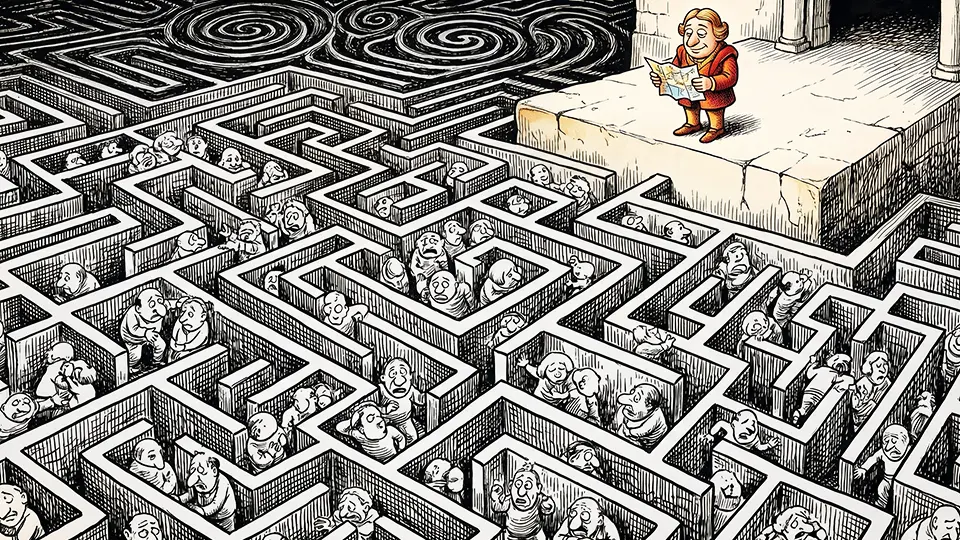
If there’s one important thing to take away from this article, it’s that feeling anxious doesn’t mean there’s something wrong with you.
Anxiety is part of the human experience. It evolved as a protective mechanism, helping our ancestors identify dangers and prepare for challenges. The problem begins when that alarm system stays switched on for too long and starts seeing threats in situations that don’t always represent real danger.
Throughout this article, we’ve seen that anxiety can affect emotions, thoughts, and even the body itself. We’ve also learned that it rarely has a single cause. Factors such as genetics, stress, trauma, social pressure, uncertainty, information overload, and lifestyle habits can all contribute to its development.
Perhaps while reading, you recognized yourself in some of the situations described here. Maybe you noticed familiar thought patterns, symptoms you’ve experienced, or worries that have become part of your daily life.
If so, know that you are not alone.
Millions of people live with anxiety at different levels. And while it can be extremely exhausting, understanding what’s happening is an important step forward. After all, it’s much harder to face something we don’t understand.
Anxiety tends to grow in confusion, fear, and lack of understanding. On the other hand, when we learn to recognize its signs and understand its roots, it stops being an unknown enemy and becomes a challenge we can face with greater clarity.
And perhaps that’s the most important message of this article: anxiety does not define who you are.
It may be part of your story, but it does not have to define your future.
In the next article, we’ll explore the most effective ways to manage anxiety, understand which strategies truly help, and discover what can be done to regain a greater sense of balance and peace in everyday life.