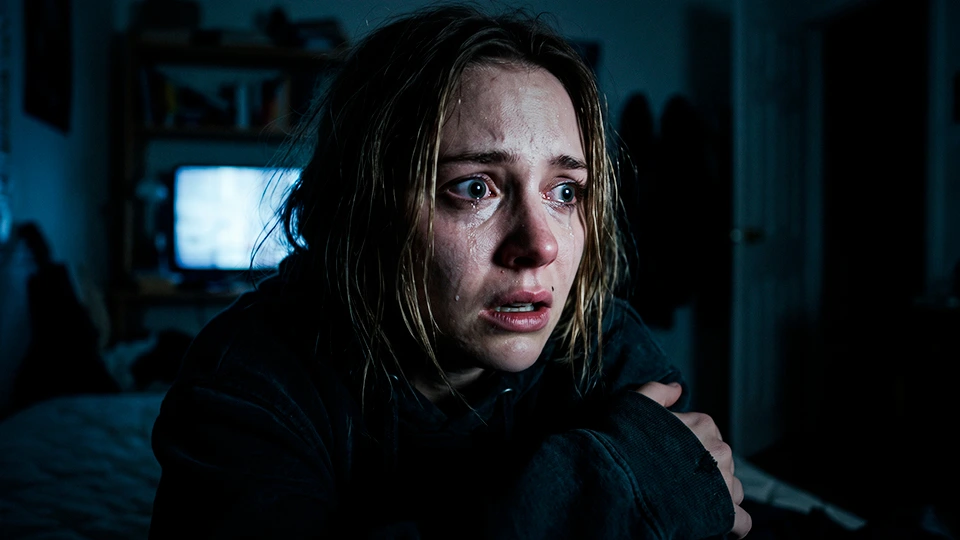
Some people are not afraid only of a quiet house, an empty bed, or a weekend with no plans. The deeper fear usually lives somewhere else: in the feeling that, if no one is around, something inside them collapses.
For some people, being alone is simply a pause. For others, it feels almost like a threat. The phone needs to be nearby. A conversation needs to stay open. Some noise has to fill the room. Not because the person is weak, dramatic, or incapable of living their own life, but because the absence of company touches emotional places that may never have been fully understood.
The fear of being alone rarely speaks only about loneliness. It can reveal fear of abandonment, difficulty regulating emotions, accumulated neediness, low internal security, emotional dependence, excessive reliance on external validation, or a painful relationship with one’s own history. Sometimes a person believes they fear the absence of others when, in reality, they fear what appears inside them when others leave the scene.
That is why this fear deserves to be observed carefully. Not to turn it into a rushed diagnosis. Not to romanticize suffering. Not to say that everyone should love being alone. Human beings need connection, presence, affection, and belonging. The point is not to eliminate the need for others. The point is to understand why one’s own company can sometimes feel unbearable.
What You Will Find in This Article
- The fear of being alone does not begin when someone leaves
- What this fear reveals about your relationship with attachment
- The fear of being alone can hide a fear of abandonment
- The loneliness that hurts and the loneliness that frightens
- Being alone reveals how you treat yourself when no one is watching
- Emptiness is not always the absence of people
- The fear of being alone can also reveal poor emotional regulation
- When company becomes escape
- What this fear is trying to protect
- How to begin losing the fear of your own company
- When to seek help
- What changes when you learn to stay with yourself
- Recommended readings and references
🎧 Audio version of this article
The fear of being alone does not begin when someone leaves
The fear of being alone often seems like a problem of the present. A person is at home, realizes they have no company, feels a tightness inside, and concludes, “I cannot be alone.” But often, the emotion that appears in that moment was not born there. The current situation only opens a door to something older.
When someone leaves, takes time to answer, cancels a plan, or becomes emotionally distant, the mind can interpret that fact in different ways. A person with greater internal security may think: “They are busy,” “today I will spend time with myself,” or “this is unpleasant, but I can tolerate it.” Another person may feel that the situation confirms a deeper fear: “I am not a priority,” “I will be forgotten,” “no one stays,” “if I do not hold on to people, they disappear.”
The external fact may be small. The internal reaction may be enormous.
This happens because the fear of being alone does not always respond to the size of the situation. It responds to the emotional meaning given to it. Being without someone for a few hours can feel like abandonment when the mind has learned, at some point, that absence means danger. Ordinary silence can feel like rejection when a person grew up associating distance with loss, indifference, or lack of love.
Attachment theory, initially developed by John Bowlby and later expanded by Mary Ainsworth, helps explain this point. In simple terms, it suggests that early caregiving experiences influence how we learn to expect presence, protection, and emotional response from others. When the bond is experienced as relatively safe, the person tends to develop a more stable internal base. When the bond is unpredictable, cold, intrusive, or absent, the search for security can become anxious, intense, or distrustful.
This does not mean childhood determines everything. People change, later bonds matter, therapy helps, and healthy experiences can reorganize patterns. But early emotional learning often leaves marks. A person can grow up, work, love, build an entire life, and still carry, somewhere intimate, the silent question: “Will anyone really stay?”
What this fear reveals about your relationship with attachment
The fear of being alone reveals, first of all, how you learned to feel safe.
Some people feel safe when they have clarity, routine, and predictability. Others need constant reassurance. Others try to control how close people remain. Others anticipate abandonment and withdraw before being left. There are also those who accept unhealthy relationships simply to avoid facing the feeling of having no one.
This fear can appear in simple sentences:
“I know this relationship hurts me, but at least I have someone.”
“If I do not send a message, they will forget about me.”
“When I am alone, I start thinking that no one cares.”
“I would rather be with anyone than feel this emptiness.”
“When someone takes time to reply, I feel I did something wrong.”
These are not just thoughts. They point to an attempt to find security outside oneself. The other person stops being only company and starts functioning as an emotional regulator. Their presence calms. Their attention confirms value. Their response reduces anxiety. The problem is that, when all stability depends on this external response, every absence becomes a threat.
At that point, the person is not only desiring connection. They are trying to remain whole through connection.
There is an important difference between wanting company and needing it in order not to collapse. Wanting company is human. Desperately needing company in order not to feel worthless is a sign that something needs care. Not because the person must become completely self-sufficient, but because no healthy relationship can bear the task of being someone’s only source of peace.
When the other person becomes medicine for everything, love begins to be confused with anesthesia.
The fear of being alone can hide a fear of abandonment
Fear of abandonment does not appear only in major losses. It can show up in small delays, changes in tone, periods of lower availability, short replies, canceled plans, interrupted conversations, or any sign the mind interprets as emotional distance.
People who fear abandonment often live in a state of constant reading. They notice details. They observe whether the message sounded different. They measure enthusiasm. They compare frequency. They try to predict whether the other person still likes them, still cares, still intends to stay.
Sometimes this vigilance looks like care. Inside, however, it is exhausting.
The person is not only living the relationship; they are monitoring the possibility of losing it. This turns the bond into a place of alert. A relationship that could be a source of exchange also becomes a source of threat, because the more important someone becomes, the greater the risk of being left without them seems to be.
This fear can lead to two opposite paths.
The first is anxious attachment: the person gets too close, demands signs, seeks reassurance, tries to reduce any distance, and feels anguish when the other person needs space. The second is avoidant defense: the person pretends they need no one, avoids depending, devalues bonds before they become dangerous, and emotionally leaves before being left.
From the outside, these patterns look different. One clings, the other runs. But in some cases, both revolve around the same wound: the difficulty of trusting that connection can exist without permanent threat.
The fear of being alone, then, does not reveal only neediness. It can reveal an inner history in which closeness and loss became deeply mixed. The person wants company but fears dependence. Wants intimacy but fears being hurt. Wants to be chosen but may doubt they can continue being chosen when they are not striving to deserve it.
The loneliness that hurts and the loneliness that frightens
There is a difference between feeling lonely and fearing loneliness.
Feeling lonely means perceiving a lack of connection. It is a human experience, sometimes painful, that can arise even in emotionally healthy people. It informs us that something in the field of bonds needs attention: perhaps more presence, more intimacy, more honest conversation, more belonging.
Fearing loneliness is different. In this case, the absence of company is not merely unpleasant. It feels dangerous. The body reacts as if something is wrong. The mind looks for quick exits. The person tries to fill every space: messages, food, social media, meetings, work, videos, shopping, conversation, any stimulus that prevents contact with the emptiness.
One kind of loneliness says: “I miss connection.”
The other says: “I do not know what to do with myself when no one is here.”
This distinction is essential. The first asks for connection. The second also asks for inner presence.
If a person is isolated, without support, affection, or meaningful social contact, the solution is not to tell them to enjoy being alone. They need to rebuild bonds. They need community, friendship, listening, and belonging. But if the person has bonds and still falls into despair at every interval of solitude, perhaps the central point is different: learning not to abandon oneself when alone.
Being alone reveals how you treat yourself when no one is watching
One of the hardest parts of being alone is that, without an audience, what remains is the relationship a person has with themselves.
When people are around, there is a social role. There is conversation. There is function. There is distraction. You can be the funny friend, the helpful person, the competent professional, the attentive partner, the responsible child. The presence of others gives shape. It helps a person know who they are supposed to be in that moment.
But when everything becomes quiet, a rawer question appears: who am I when I am not responding to anyone?
For some people, this question is liberating. For others, it is threatening.
Being alone can reveal intense self-criticism. The person does not rest; they accuse themselves. They do not relax; they review mistakes. They do not welcome themselves; they compare themselves. They do not inhabit their own company; they judge themselves internally. In that case, the problem is not only being alone. The problem is being alone with a hostile inner voice.
Imagine someone who, whenever silence appears, hears thoughts such as: “you are falling behind,” “no one really likes you,” “your life is empty,” “you should be doing more,” “everyone has someone except you.” It is not strange that this person wants to escape. Who would want to spend hours in the company of a relentless judge?
That is why learning to be alone does not begin only by scheduling moments of solitude. It begins by changing the quality of one’s inner presence. It is not enough to be physically alone. One must learn to be with oneself without turning that encounter into punishment.
Emptiness is not always the absence of people
Many people call loneliness what is actually existential emptiness, lack of direction, disconnection from personal desires, or distance from one’s own life.
The person believes they need someone, but perhaps they also need meaning. They need to feel that their routine has some coherence. They need to recover interests, projects, body, spirituality, creativity, friendship, nature, study, movement, rest. When life is reduced to waiting for messages, pleasing people, or maintaining bonds at any cost, the absence of another person leaves a huge hole because there are no other sources of vitality.
In that case, the question “why am I afraid of being alone?” may hide another one:
“What exists in my life besides waiting for someone else?”
This question can hurt, but it can also free. It reveals that part of the fear will not be solved only by finding someone. A relationship can bring affection, but it cannot replace an entire life. It can accompany, but it cannot live for you. It can offer presence, but it cannot be the only reason your days feel bearable.
When someone deposits in another person the mission of filling the entire meaning of existence, the bond becomes heavy. The loved person stops being a person and becomes a support structure. Any distance feels like falling. Any change feels like threat. Any need for space feels like rejection.
Healthy relationships tend to flourish better when two people meet each other, not when one person uses the other as a wall against their own emptiness.
The fear of being alone can also reveal poor emotional regulation
Emotional regulation is the ability to move through difficult emotions without needing to erase them immediately through someone or something. It is not coldness. It is not indifference. It is not “handling everything alone.” It is the ability to feel something uncomfortable and still remain at least minimally present.
People with little emotional regulation may feel that every intense emotion requires an immediate response. If anxiety comes, they send a message. If neediness appears, they look for someone. If sadness comes, they open social media. If fear appears, they try to control the other person. If emptiness comes, they fill the schedule.
The problem is not seeking support. Seeking support is healthy. The problem appears when a person cannot tolerate any interval between feeling and reacting.
Being alone requires that interval. It requires noticing the emotion, naming it, breathing, observing the impulse, and choosing what to do. Sometimes the best choice will be to talk to someone. Sometimes it will be to rest. Sometimes it will be to write. Sometimes it will be to cry. Sometimes it will be to seek professional help. Sometimes it will simply be not turning an emotional wave into a definitive decision.
Without that interval, fear begins to direct life.
The person ends relationships before being left. Accepts crumbs in order not to feel emptiness. Returns to someone who hurts them because emotional withdrawal feels worse than familiar pain. Seeks reassurance repeatedly and, even when they receive it, feels relief only briefly. Fear asks for more proof, more presence, more guarantees.
But no external guarantee fully resolves an insecurity that has not yet found an internal base.
When company becomes escape
Not every company is connection. Sometimes it is only shared escape.
Some people remain in empty conversations, ambiguous relationships, draining friendships, groups where they feel invisible, or romances that wound them, not because those experiences nourish them, but because being there seems less frightening than going home and facing silence.
This is a delicate point: the fear of being alone can reduce the quality of emotional choices.
When the inner question is “who is good for me?”, the person tends to choose with more clarity. When the question is “who prevents me from being alone?”, the standards fall. Any attention becomes hope. Any presence becomes relief. Any small sign of interest seems better than nothing.
That is how many people confuse intensity with love, insistence with connection, dependence with depth, jealousy with care, and fear of losing with proof of feeling.
The fear of being alone can make a person negotiate important parts of themselves. They tolerate disrespect, reduce their needs, hide discomfort, accept uncertainty, abandon boundaries, and call it patience. Underneath, however, there may be a simple and painful truth: they are not choosing to stay; they are afraid to leave.
Learning to be alone, in this sense, does not destroy love. On the contrary. It returns discernment to love. When a person discovers they can survive their own company, they begin to choose relationships for real presence, not out of panic at absence.
What this fear is trying to protect
Every fear tries to protect something.
Even when it seems exaggerated, inconvenient, or irrational, fear usually has a function. It tries to avoid a known or imagined pain. In the case of the fear of being alone, perhaps it is trying to protect you from reliving abandonment, rejection, invisibility, helplessness, or the feeling of having no value.
That is why it does not help to treat this fear with contempt. Saying “just be alone” can be as useless as telling someone with anxiety to “just stop worrying.” The mind does not abandon a pattern simply because it receives an order.
A more mature approach begins with curiosity:
“What do I feel when I am alone?”
“What story does my mind tell about this moment?”
“Do I miss someone, or am I afraid I am not important to anyone?”
“Am I looking for company, or am I trying to escape an emotion?”
“What part of me believes it will not be held?”
These questions are not meant to blame you. They are meant to separate layers. When everything is called loneliness, everything seems to have the same solution: finding someone. But when you distinguish abandonment, emptiness, anxiety, neediness, lack of meaning, self-criticism, and a legitimate need for connection, you begin to respond with more precision.
Each pain asks for a different kind of care.
How to begin losing the fear of your own company
Overcoming the fear of being alone does not mean forcing yourself into long periods of isolation. For many people, that only increases distress. The wiser path is usually gradual.
Start with small experiences of presence with yourself.
Ten minutes without a screen. A short walk without audio. A meal in silence. A few lines written about what you are feeling. A shower without turning the phone into company. An interval in which you notice the urge to escape but do not obey it immediately.
The goal is not to like all of it. The goal is to show the body and mind that being alone can be uncomfortable without being dangerous.
Then try to name the experience more precisely. Instead of saying only “I am alone,” ask:
“Am I sad?”
“Am I anxious?”
“Do I feel rejected?”
“Am I bored?”
“Do I miss someone?”
“Am I afraid of not being remembered?”
“Do I lack direction?”
Naming reduces confusion. The emotion remains, but it stops being an indistinct mass. And what has a name can be cared for with more intelligence.
It is also important to build varied sources of life. Not to deny relationships, but to avoid depending on one person or one type of validation. A routine with body, learning, friendship, meaningful work, rest, creativity, and small commitments to yourself creates a wider base. The narrower life becomes, the more frightening the absence of one specific person feels.
Another step is to observe your relational impulses. When you feel an urgent desire to send a message, call, look for someone, or accept an unhealthy presence, ask:
“Am I doing this for connection or out of desperation?”
“Does this person do me good, or do they only distract me?”
“After this contact, do I usually feel more at peace or more dependent?”
“Am I asking for presence, or demanding that someone regulate a pain I need to understand?”
These questions do not mean you should never seek support. On the contrary: safe bonds help a great deal. But healthy support does not eliminate the responsibility to develop some capacity for inner steadiness.
When to seek help
The fear of being alone deserves professional attention when it causes intense suffering, leads to harmful relationships, triggers anxiety crises, blocks important decisions, feeds compulsive behaviors, or makes the person feel unable to function without constant reassurance from someone.
It is also important to seek help when this fear is accompanied by a history of abandonment, grief, trauma, abusive relationships, persistent emptiness, self-destructive thoughts, or difficulty maintaining boundaries. In these cases, therapy is not meant to teach someone to “need no one.” It is meant to help the person build safer bonds, understand wounds, regulate emotions, and develop a less threatening relationship with themselves.
Some pains do not need to be faced in loneliness. Maturity is not enduring everything in silence. It is knowing when caring for yourself also means asking for qualified presence.
What changes when you learn to stay with yourself
When the fear of being alone begins to decrease, something changes in the way a person loves.
They stop looking for any presence and begin recognizing good presence. They stop accepting any response and start observing consistency. They stop interpreting every distance as abandonment. They stop abandoning themselves to be chosen. They stop turning the other person into salvation.
This does not make anyone invulnerable. There will still be longing, desire for company, sadness, occasional insecurity. The difference is that these states no longer command everything. Someone’s absence can hurt without destroying. Silence can bother without becoming a sentence. Waiting can be difficult without erasing one’s dignity.
Being well alone does not mean always preferring to be alone. It means having an inner home to return to.
And this home is not born ready. It is built slowly: in the way you treat yourself when you make mistakes, in how you listen to your emotions, in the boundaries you decide to respect, in the relationships you stop accepting out of fear, in the small moments when you stay with yourself without wounding yourself inside.
Perhaps the fear of being alone is not trying to say you were born to live without anyone. Perhaps it is showing that some part of you still believes you only exist when you are chosen, remembered, or accompanied.
That part does not need to be humiliated. It needs to be educated with patience.
You still need love, presence, and connection. That is not weakness. It is humanity. But you also need to discover that your existence does not disappear when someone leaves the room, takes time to answer, or follows another path.
Your own company stops being a threat when you stop using it as proof of abandonment. Silence changes meaning when it stops being a courtroom and becomes a space for listening. Little by little, the most important question stops being “who will stay with me?” and becomes “can I stay with myself without abandoning myself?”
When that answer begins to change, fear loses part of its power. Not because loneliness becomes perfect. But because you stop confusing being alone with being lost.
Recommended readings and references
John Bowlby, especially his work on attachment and loss, helps explain how early bonds influence the search for emotional security.
Mary Ainsworth made an important contribution to the observation of attachment patterns and to the understanding of how different caregiving experiences affect the relationship with closeness and separation.
Robert S. Weiss is a relevant reference for distinguishing emotional loneliness from social loneliness, a useful distinction for understanding why not every absence of company hurts in the same way.
Erich Fromm, in The Art of Loving, offers a philosophical and psychological reflection on love, dependence, maturity, and the ability to be with oneself without turning the other person into the solution for every lack.