
🎧 Listen to the Audio Version of This Article
introduction
There is a kind of exhaustion that almost no one notices. It’s not just physical fatigue, overwork, or a lack of rest. It’s the exhaustion that comes from constantly trying to live up to everyone else’s expectations.
You think before you act, weigh every word, monitor your behavior, avoid disappointing people, and constantly seek acceptance. Little by little, often without realizing it, you begin to drift away from who you truly are.
Many people live this way for years. They spend their lives emotionally tied to the opinions of others, dependent on approval, overly sensitive to judgment, and focused on maintaining an image that pleases everyone around them.
The problem is that the more you seek validation from the outside world, the more disconnected you become from your own identity. Eventually, you reach a point where you can no longer tell the difference between what you genuinely want and what you have learned to want in order to be accepted.
Perhaps that is why so many people live with anxiety, emotional exhaustion, and a constant sense of dissatisfaction, even when everything appears to be fine on the surface. They are not fully living their own lives. They are living edited versions of themselves.
In the video “Focus Only on Yourself and Forget Everyone Else,” we explored the invisible prison created by the constant need for approval. In this article, however, we will go beyond reflection. The goal is to show you practical ways to reclaim your attention, protect your mental energy, and reconnect with yourself.
Because focusing more on yourself does not mean becoming cold, arrogant, or selfish. It means stopping the habit of abandoning your true self in order to satisfy external expectations. At its core, focusing on yourself is an act of reconnection. It is the process of returning inward after spending far too much time lost in the eyes of other people.
Why Do You Care So Much About What Other People Think?
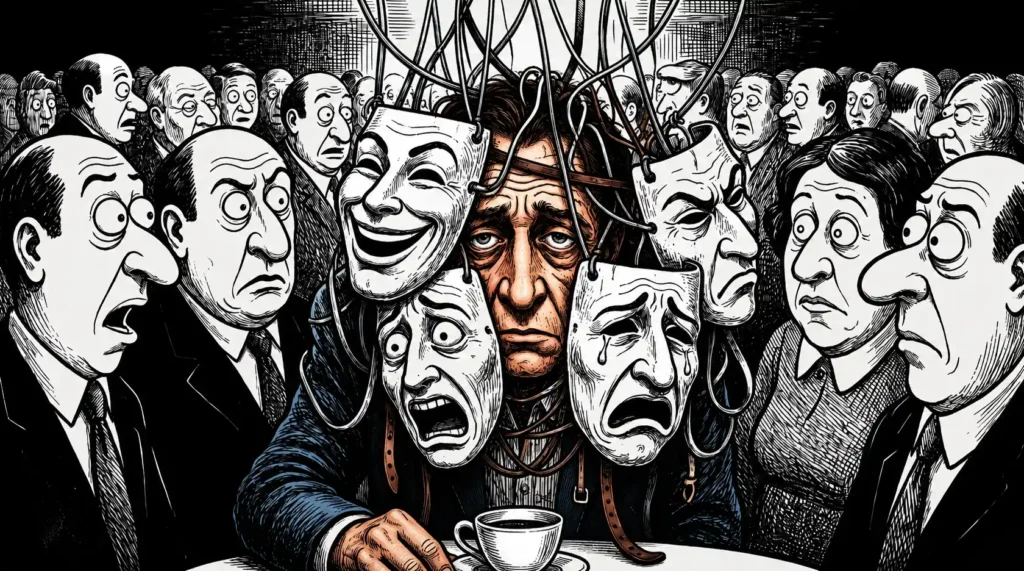
The need for approval does not appear out of nowhere. It begins long before you become aware of it. From our earliest years, we learn that acceptance means safety. A child depends on the approval of parents, family members, and the surrounding environment in order to feel that they belong.
When a child receives praise, they feel secure. When they are criticized or rejected, they feel fear. Over time, the brain starts associating acceptance with personal worth. That is when a quiet pattern begins to develop: pleasing others in order not to lose love, adapting yourself to avoid rejection, and hiding parts of who you are in order to belong.
The problem is that many people grow older but remain emotionally trapped by this mindset. They continue living as though their emotional survival depends on the approval of others. That is why criticism hurts so deeply, why judgment creates anxiety, and why so many people feel an overwhelming need to please everyone around them.
At the core of it all is fear. Fear of not being accepted. Fear of being excluded. Fear of disappointing others. Fear of not being enough. And today, there is something that amplifies all of these fears more than ever before: social media.
Never in human history have people compared themselves to one another as intensely as they do today. You open your phone and see seemingly perfect lives: perfect bodies, perfect relationships, success, popularity, wealth, and happiness. Without realizing it, you begin comparing your real life to everyone else’s carefully edited highlight reel.
This creates a constant sense of inadequacy, as if everyone else is living a better life while you are somehow falling behind. Carl Jung spoke about something he called the “persona” — the social mask we create in order to be accepted by the world.
The persona represents the version of ourselves that we present to others: the acceptable, admirable, and socially approved side of who we are. The problem begins when you spend so much time feeding that mask that you forget who you really are beneath it.
At that point, you are no longer living to express your true self. You are living to maintain an image. And that creates a quiet emptiness, because no mask can sustain inner peace forever.
External validation works almost like an emotional addiction. Praise creates a momentary sense of pleasure, a social media like delivers a quick reward, and approval provides temporary relief. But it never lasts. So you find yourself chasing more recognition, more acceptance, and more validation.
Little by little, your self-worth stops coming from within and becomes completely dependent on the reactions of other people. That is the danger: when you rely too heavily on the approval of others, you slowly begin to abandon your own identity.
And perhaps one of the most painful forms of loneliness is this: spending so much time trying to be accepted that you no longer recognize who you truly are.
Signs That You’re Living More for Others Than for Yourself

Many people spend years believing they are simply being kind, understanding, or considerate toward others, when in reality they are emotionally trapped by a constant need for acceptance.
The challenge is that this behavior is often subtle. It blends into your routine, your personality, and the way you have learned to navigate life. As a result, many people never realize they stopped living for themselves a long time ago.
However, there are certain signs that reveal when your life has started revolving more around other people’s opinions than around your own truth.
You Overthink Everything Before You Speak
Before saying anything, you calculate. You analyze reactions, imagine possible interpretations, and try to predict how others might judge you. Then you start adjusting your words to avoid upsetting someone.
Over time, even simple conversations become exhausting because you are never completely free in what you say. There is always an invisible filter trying to protect your image.
You Live with a Constant Fear of Judgment
You worry excessively about what other people might think of your appearance, your decisions, your personality, and your life. This creates a state of permanent mental vigilance.
It is like living in front of an invisible audience. Even when no one is paying that much attention to you, your mind behaves as though you are being watched at all times.
You Constantly Compare Yourself to Others
Comparison becomes automatic. You look at other people and feel behind, as if you have not achieved enough, are not interesting enough, or simply do not have enough value.
The problem is that the more time you spend looking at everyone else’s life, the less attention you give to your own. Eventually, your self-esteem becomes dependent on feeling “better” than someone else.
You Feel Guilty When You Say “No”
Even when you are tired, even when you do not want to do something, and even when it is harmful to you, you still feel guilty for putting yourself first. So you agree to things you do not want, tolerate situations that hurt you, and say “yes” simply to avoid conflict or disappointing someone.
Little by little, you begin abandoning your own needs in order to maintain the approval of others.
Your Personality Changes Depending on Who You’re Around
In certain environments, you behave one way. In others, you become someone completely different. You change your opinions, your behavior, and even the way you speak because of a quiet fear of not being accepted as you truly are.
So you learn to adapt yourself emotionally to fit into different groups. The problem is that after doing this for years, you may no longer know which version is actually you.
You Seek Approval Even for Small Decisions
You constantly look for validation. You ask people what they think, whether they would do the same thing, whether something looks good, or whether others will approve. Even with simple decisions, you search for outside confirmation.
This happens because your inner confidence has weakened. You have forgotten how to trust your own judgment.
You Feel Emotionally Drained After Social Interactions
After spending time with certain people, you feel exhausted in a way that is difficult to explain. That is because you were not simply socializing. You were performing, trying to please others, controlling your behavior, and monitoring your image the entire time.
Perhaps that is why so many people feel exhausted even when they have not done anything physically demanding. They spend the entire day trying to maintain acceptable versions of themselves.
Maybe the most painful part is that many of these signs seem completely normal. Yet there is a huge difference between connecting with others and becoming emotionally dependent on them. When your happiness depends too heavily on external approval, you slowly begin to abandon who you truly are.
The Danger of Building Your Life Around External Validation
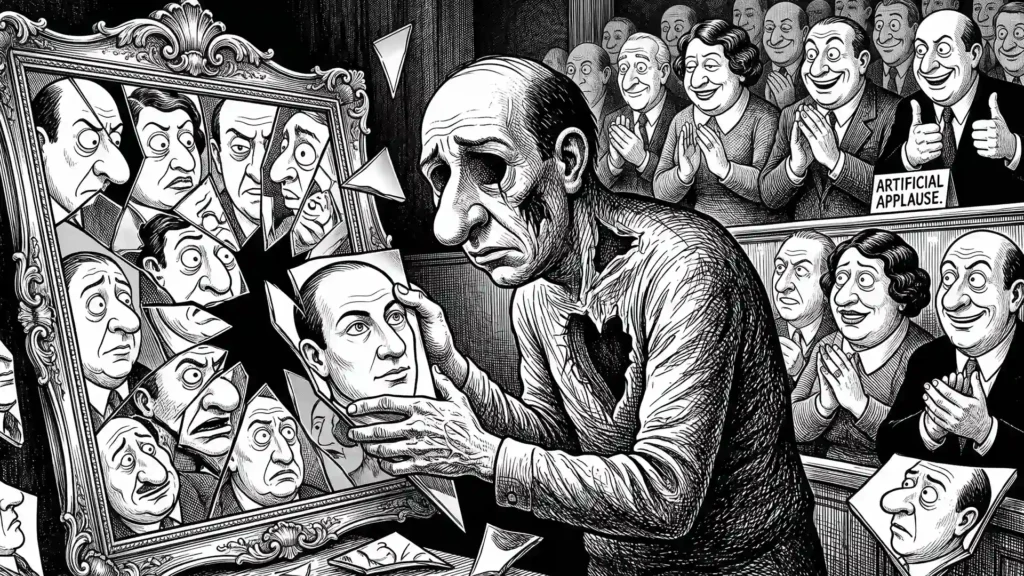
There is something incredibly dangerous about living in dependence on the approval of others: you place your peace of mind in the hands of people who have no real control over your inner world.
When your happiness constantly depends on how other people react to you, you lose emotional freedom. A compliment brightens your day, a criticism shatters your confidence, rejection undermines your self-worth, and someone’s silence fills you with anxiety.
Your emotional stability stops coming from within and starts fluctuating according to the behavior of others. That is the problem with external validation: it turns your identity into something unstable.
You never truly know who you are. You only know how other people are responding to you at a given moment. And there is something even more subtle happening beneath the surface: little by little, you begin losing your authenticity.
You start hiding your opinions, suppressing your emotions, adjusting your behavior, changing your preferences, and reshaping your personality — all to remain accepted.
The problem is that the harder you work to build a perfect image for the world, the further you drift from your true self. Eventually, you stop living spontaneously. You begin performing.
Performing means spending your life trying to maintain an “acceptable” version of yourself. You smile when you do not want to, agree when you disagree, pretend to be okay, pretend to feel confident, and pretend to be happy because fear is driving it all: fear of judgment, fear of rejection, and fear of not being enough.
But no performance can sustain inner peace forever. Deep down, you know when you are living something artificial. Perhaps that is exactly why so many people feel emotionally exhausted despite appearing successful on the outside.
They have built a life based on recognition rather than truth. And there is a difficult reality to face: external validation can never permanently fill an internal void. It only numbs it for a moment. Then the need returns, stronger than before.
So the cycle continues. More approval. More attention. More recognition. More confirmation. The more you depend on others to feel worthy, the less capable you become of sustaining your identity on your own.
That is why learning to focus more on yourself is not arrogance. It is about reclaiming your emotional center before your entire life becomes built around the need to please others.
How to Stop Comparing Yourself to Others
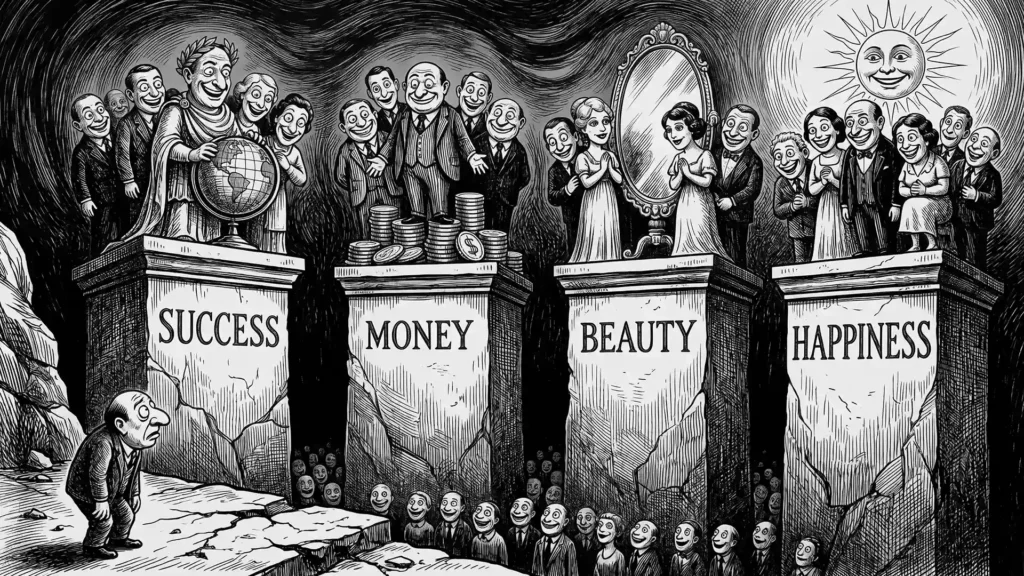
Comparison has become an automatic habit of modern life. You pick up your phone for a few minutes and, without realizing it, start measuring your life against the lives of others. The problem is that almost nobody is showing the full reality.
People display their achievements but hide their insecurities. They share their successes but conceal their struggles. They showcase happiness while hiding emotional emptiness. As a result, you end up comparing your behind-the-scenes reality to someone else’s carefully curated highlight reel.
This slowly destroys the way you see yourself, because there will always be someone who appears more attractive, wealthier, more productive, more admired, or further ahead in life. And if your self-worth depends on that comparison, you will never find peace.
That is why one of the most important first steps is reducing excessive social media consumption. Not because social media is inherently bad, but because constant exposure to other people’s lives distorts your perception of reality.
The more time you spend watching someone else’s journey, the less energy you have available to build your own. Another important realization is that everyone moves through life at a different pace. Not everyone blooms early, matures quickly, or gains clarity at the same time.
There is enormous pressure to follow the same timeline: rapid success, rapid results, and rapid growth. But real life does not work that way. Some people need more time, more silence, more experiences, more mistakes, and more self-discovery.
That does not mean failure. It simply means that the human journey is different for everyone. That is why creating goals based on your own reality is so important, rather than measuring yourself against society’s expectations, other people’s timelines, or constant comparison.
Perhaps one of the healthiest ways to grow emotionally is to learn how to admire someone without diminishing yourself in the process. You can recognize another person’s success without turning it into evidence that you are somehow worth less, because someone else’s achievements do not reduce your value.
The biggest problem with constant comparison is that it destroys your ability to appreciate your own journey. You stop noticing your progress, stop celebrating small victories, and stop recognizing how far you have come because your attention is always fixed on those who seem to be further ahead.
But the truth is that emotional peace is not born from the feeling of outperforming others. It comes when you finally stop turning life into a competition.
Learn to Be Alone Without Feeling Empty
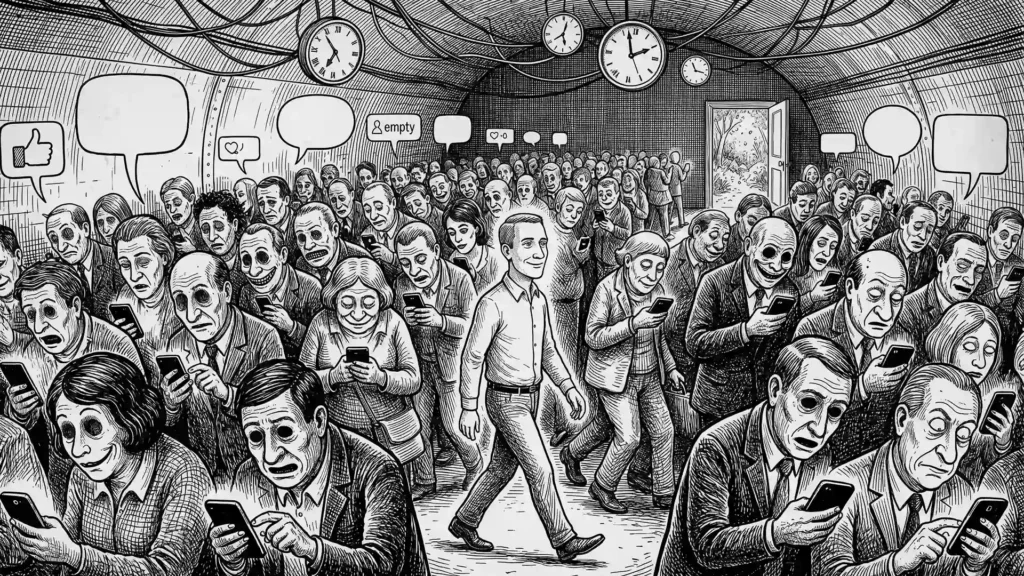
Perhaps one of the hardest things in modern life is simply sitting in silence with yourself. No distractions. No notifications. No conversations. No music. No videos. No one there to fill the emptiness within.
The truth is that many people are not afraid of being alone. They are afraid of what they will find when they finally are. There is a profound difference between loneliness and solitude. Loneliness hurts because it comes with feelings of abandonment, emptiness, and disconnection. Solitude is different. It is the ability to be with yourself without feeling that something is missing.
The problem is that most people were never taught how to do that. From an early age, we are conditioned to seek constant distraction. There is always something occupying the mind: phones, social media, noise, content, messages, and endless entertainment.
Over time, silence starts to feel uncomfortable because it brings forward questions we usually avoid: “What do I truly want?” “Why do I feel empty?” “Am I living the life I actually want?” and “Who am I when nobody is watching?”
Perhaps that is why so many people keep themselves busy every moment of the day. Not because they love being occupied, but because they are afraid to stop. Modern distractions create a constant escape from oneself.
The moment discomfort appears, you immediately look for stimulation. You grab your phone, search for videos, scroll through social media, start a conversation, or turn something on in the background. But the more you run from silence, the less able you become to hear your own mind.
There is something deeply important about learning how to be alone. It is in silence that your truth begins to emerge. When the noise fades, you finally start noticing your real thoughts, your genuine emotions, and your deepest desires.
Silence does not create who you are. It simply reveals it. That is why cultivating moments of solitude can be one of the most transformative things you do for your emotional well-being. And it does not have to begin in an extreme way. Even small moments can make a difference.
Taking a walk alone without distractions, for example, can help slow your mind down. Writing is also a powerful tool because putting your thoughts on paper allows you to see emotions that were previously hidden beneath mental chaos. Often, you only discover what you truly feel when you finally stop and listen to yourself.
Spending more time offline can be equally beneficial. Your mind needs breaks from the constant flood of information. Today, people consume so much content that they can barely hear their own thoughts anymore. Everything becomes reaction, impulse, comparison, and overload.
That is why reducing constant stimulation is so important. Not every silence needs to be filled, and not every moment requires distraction. Meditation and reflection can also support this process, not as a rigid obligation but as an opportunity to reconnect with yourself.
Just a few minutes of genuine presence can reveal more about who you are than hours of endless distraction. And perhaps the greatest transformation happens here: when you learn to be alone without feeling empty, you stop desperately depending on other people to feel complete.
Relationships stop being an emotional necessity and become a choice. You stop seeking people merely to escape yourself and finally begin building a genuine relationship with the person you may have neglected for years: yourself.
Practical Ways to Focus More on Yourself

Understanding all of this is important, but at some point reflection must become action. Focusing more on yourself does not happen through deep thoughts alone. It happens through small daily changes that bring your attention back to your own life.
And more often than not, it is the simplest habits that begin rebuilding your connection with yourself.
Stop Explaining Everything to Everyone
Not every decision needs to be justified. Many people spend their lives constantly explaining their choices because they fear disapproval. They explain why they changed, why they ended a relationship, why they turned something down, why they chose to rest, or why they decided to take a different path.
But there is freedom in realizing that you do not need other people’s emotional permission to live your own life. The more you try to convince everyone, the more power you give them over your peace of mind.
Learn to Say “No”
Saying “no” is one of the most important forms of self-respect. Every time you say “yes” to something that destroys your peace, you are saying “no” to yourself.
Many people exhaust themselves trying to avoid conflict. They agree to things they do not want, tolerate uncomfortable situations, and sacrifice their emotional well-being just to remain accepted. But emotional maturity also means understanding that disappointing some people is part of living authentically.
Not every boundary is selfish. Sometimes, it is emotional survival.
Protect Your Mental Energy
Not every environment deserves access to your mind. There are people, situations, and forms of content that constantly drain your emotional energy, including negative conversations, endless comparisons, toxic environments, excessive social media use, and people who criticize everything around them.
The longer you remain exposed to these influences, the more mental clarity you lose. Protecting your mental energy means becoming more intentional about what you consume every day, because your mind is constantly being fed by what surrounds it.
Keep Some Goals to Yourself
Not every dream needs to be announced. There is something powerful about building your life quietly, without constantly seeking approval, without external pressure, and without the need to impress anyone.
Often, when you share your goals too early, you end up trading action for validation. You receive recognition before doing the work, creating a false sense of progress. Some of life’s greatest transformations happen away from public attention, through consistency and the private commitment you make to your own goals.
Develop Hobbies Without Seeking Approval
Do something simply because you enjoy it, without worrying about status, admiration, or whether it will become an achievement. Read, draw, write, exercise, walk, or learn something new, but do it for personal fulfillment rather than social validation.
When every activity has to generate recognition, even enjoyment begins to feel like pressure.
Do More Things Without Posting Them Online
Today, many people struggle to experience life without turning it into content. Everything has to be shared, documented, published, and validated.
But there is something deeply healthy about living moments that belong only to you. Not every happy experience needs an audience. Sometimes, the most meaningful moments in life happen when nobody else is watching.
Let Go of the Need to Impress
The constant need to impress others often hides emotional insecurity. You try to appear stronger, more interesting, more intelligent, and more successful than you really feel. But maintaining a perfect image is exhausting.
Emotionally free people do not feel the need to prove their worth all the time. They simply live. And perhaps there is more strength in someone who is authentic and at peace than in someone who is constantly trying to impress the world.
Create a Routine That Keeps You Connected to Yourself
Your routine shapes your mind. If your days are filled only with urgency, distractions, and external stimulation, you gradually lose touch with yourself.
That is why it is important to create small moments of presence throughout your day: moments of silence, reflection, reading, mental rest, and time away from screens. Not to escape the world, but to avoid disappearing within it.
Because in the end, focusing more on yourself does not mean abandoning other people. It simply means stopping the habit of abandoning yourself in order to be accepted by them.
What Happens When You Finally Return to Yourself
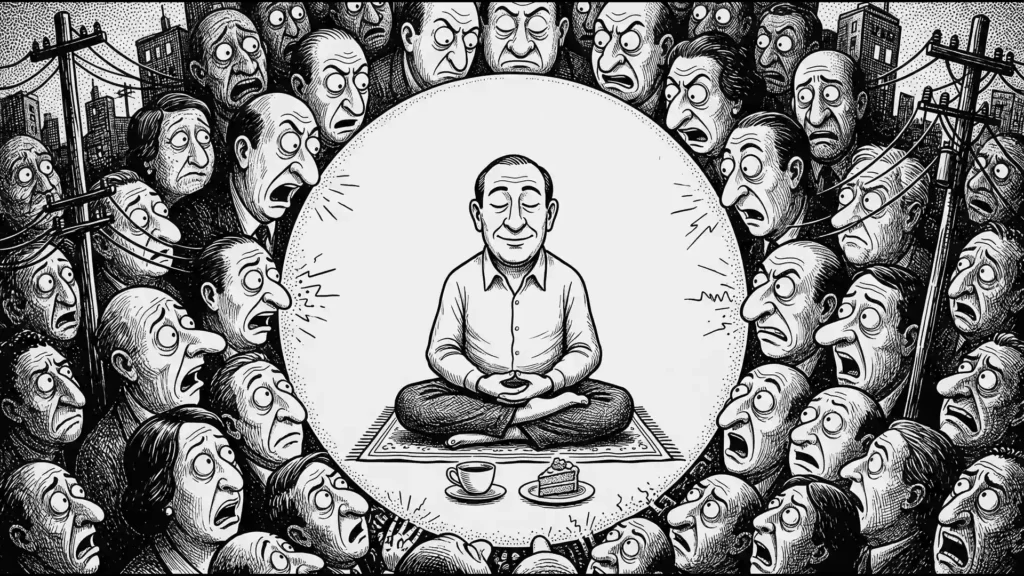
There is a very quiet moment in this journey. A moment when you realize you no longer feel such a strong need to impress anyone. You stop overthinking every word before you speak, stop obsessively managing the image you project, and stop living under the invisible judgment of others.
Something inside you slowly begins to breathe again. Perhaps this is one of the first changes you notice: peace of mind. Not because life suddenly becomes perfect, but because your mind is no longer trapped in a constant state of vigilance.
You no longer feel the need to monitor every detail of your existence in order to feel worthy. That brings a sense of lightness that is difficult to describe. Social anxiety also begins to fade because, once you stop depending so heavily on external approval, other people’s opinions lose their power over you.
You stop entering every room desperate to be liked. You no longer crave constant validation, and you stop turning every interaction into a test of your worth. In its place, something rare begins to emerge: authenticity.
You start living with less fear. Another profound change is clarity. When you stop spending your life merely reacting to the world around you, you finally begin listening to yourself. It becomes easier to recognize what truly matters, what does not, what comes from genuine desire, and what was only driven by a need for acceptance.
For a long time, you may have been following expectations that were never truly yours. But when you return to yourself, you finally begin building a life that aligns with your own truth.
This transformation also changes your relationships. Connections built solely on emotional need often create dependency, fear, and exhaustion. But when you learn to feel at peace with yourself, your relationships become more honest and genuine.
You no longer approach people merely to fill an inner void. You no longer feel the need to pretend in order to be loved, and you stop tolerating unhealthy situations out of fear of being alone. Instead, you begin forming deeper and more authentic connections.
Perhaps this is where authenticity is truly born. Not as a perfect version of yourself, but as someone who no longer feels compelled to hide who they are.
You stop performing so much. You stop trying to appear strong, impressive, or valuable every moment of the day. And you discover that there is tremendous freedom in simply being yourself.
Emotional freedom does not mean never feeling pain. It means no longer depending on other people’s reactions to support your sense of identity. You still listen to opinions, interact with people, and participate in the world, but the center of your life is no longer outside of you. It is within.
And perhaps that is the most powerful feeling of all: inner alignment. The sense that your life finally makes sense to you, even without applause, constant approval, or the need to impress anyone.
Because when you stop living to be accepted, you finally begin living in peace. And perhaps that is the true freedom so many people search for in the world without realizing that it has always begun within themselves.
Conclusion
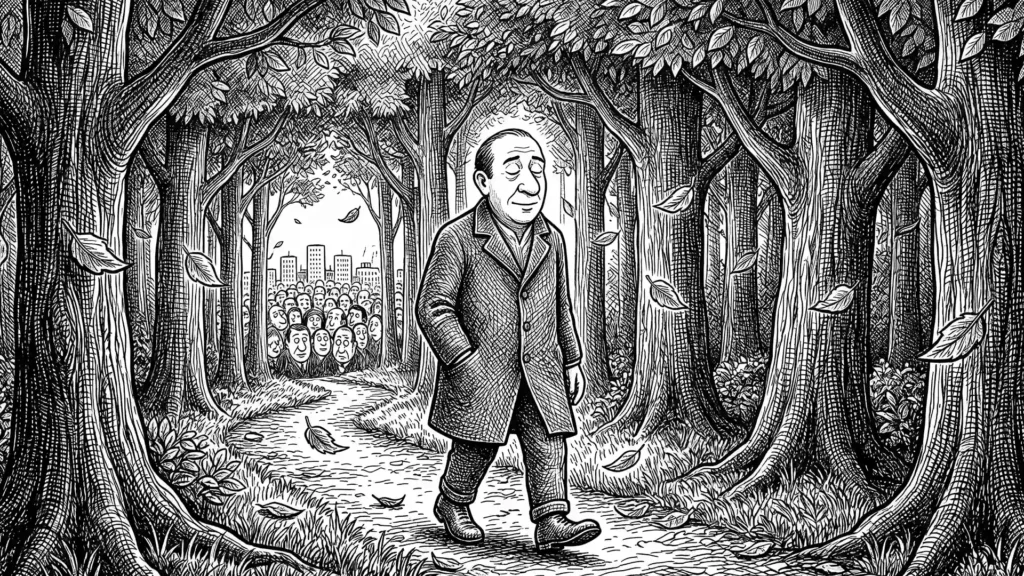
Perhaps one of the greatest mistakes of modern life is convincing people that focusing on themselves is selfish. It is not. Selfishness is using, manipulating, hurting, or exploiting others. Returning to yourself is something entirely different. It is emotional survival.
Throughout this article, and in the video “Focus Only on Yourself and Forget Everyone Else,” we explored how many people spend years emotionally trapped by the opinions of others. Seeking approval, trying to please everyone, hiding parts of themselves, maintaining social masks, and constantly comparing their lives to those around them.
Little by little, they drift away from their true nature. Because the problem is not caring about people, connecting with others, or valuing relationships. The problem begins when you abandon yourself in order to remain accepted.
Focusing more on yourself does not mean turning your back on the world. It simply means refusing to abandon your truth in order to fit someone else’s expectations. Perhaps you no longer need to prove so much, impress so much, or carry the constant burden of trying to appear good enough.
There is a quiet freedom that emerges when you finally understand that your worth does not depend on the approval of others. And perhaps the first step toward that freedom is learning to listen more closely to your own inner voice.
If you would like to explore this idea even further, be sure to watch the video “Focus Only on Yourself and Forget Everyone Else” on the Codes of the Mind channel. Sometimes a single reflection at the right moment can completely change the direction of your life.
And now, here is one final question: how many of the decisions in your life truly came from you, and how many were born simply from the fear of disappointing other people?
➡️ Explore more articles on Codes of the Mind