Introduction
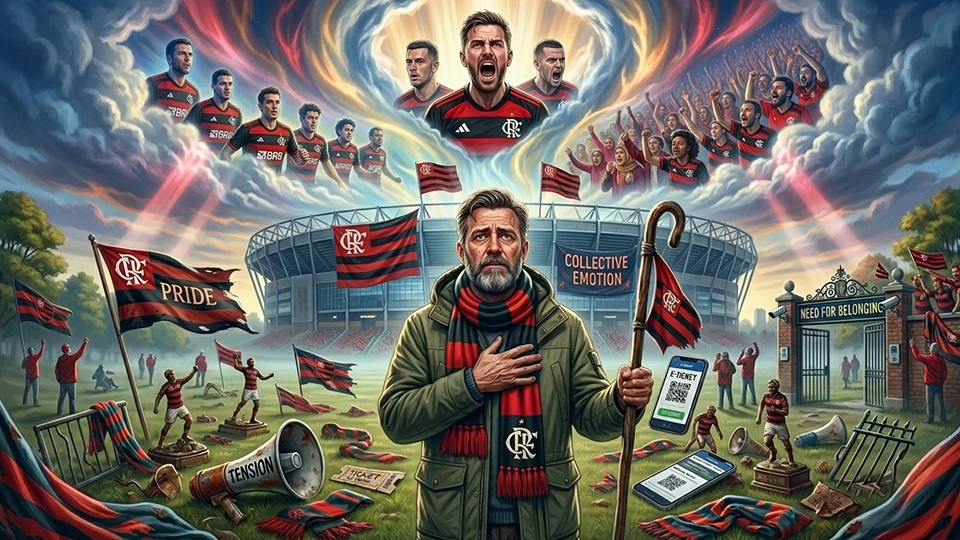
The Psychology of Football Fanatics. Football is one of the most powerful forms of collective belonging in the world. For many people, supporting a club is something healthy: a weekend tradition, a family legacy, a way to connect with friends, and an emotional language passed down from childhood. The problem begins when passion stops being a preference and becomes a rigid part of a person’s identity.
A football fanatic doesn’t simply support a team—they become one with it. The club’s victory feels like personal validation. A defeat feels like a direct humiliation. A rival fan’s taunt is experienced as a personal attack. The referee, opposing team, media, coach, and even the club’s own players can become targets of intense anger because, for this person, the match is no longer just a game.
From a psychological perspective, this behavior goes far beyond a love of sports. It involves identity, belonging, emotional compensation, aggression, the need for control, emotional memory, and the desire for recognition. Football provides a ready-made structure for all of these needs: symbols, colors, chants, history, heroes, villains, rituals, and a community that constantly reinforces the feeling of being part of something bigger than oneself.
That doesn’t mean every passionate supporter has a problem. There is a clear distinction between passion and fanaticism. Passion allows deep emotional involvement without sacrificing the ability to think rationally. Fanaticism reduces a person’s entire perspective to a single lens. They interpret events, relationships, and conversations through the filter of their club. They lose perspective. They lose emotional distance. And often, they lose sight of the fact that life exists beyond the final score.
Understanding the psychology of football fanatics is not an attack on football. On the contrary, it is about separating the beauty of the sport from the emotional extremes that can turn joy into hostility, identity into rigidity, and belonging into conflict.
What You’ll Find in This Article
- Football as Identity
- The Club as a Source of Belonging
- Why Fans Suffer So Much
- The Ego Behind the Jersey
- Aggression and Emotional Release
- Fanaticism and Groupthink
- The Difference Between Supporting a Team and Emotional Dependence
- The Role of Childhood and Family
- The Need for Heroes and Villains
- The Role of Social Media in Fanaticism
- When Fanaticism Causes Real Harm
- How to Develop a Healthier Relationship with Football
Audio Version of This Article
Football as Identity
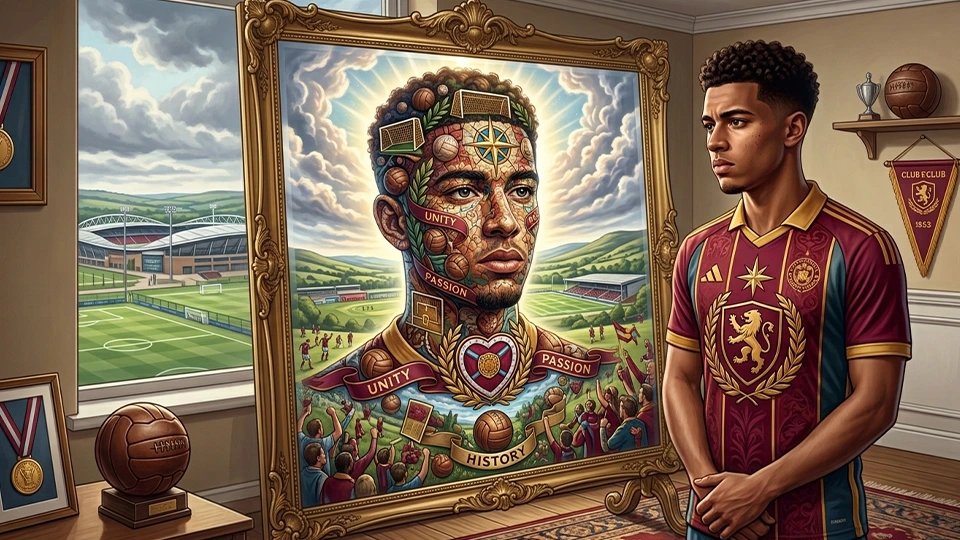
Every human being seeks, in one way or another, to answer the question, “Who am I?” That answer is never shaped solely by individual characteristics. It is also influenced by the groups a person belongs to. Family, religion, place of origin, social class, profession, ideology, and a football club can all become important parts of one’s identity.
In football, this identification often begins early in life. A child doesn’t always choose a team; more often, the team is chosen for them. It comes from a father, mother, grandparent, neighborhood, hometown, television, or school friends. The first jersey, the first match watched with family, the first championship celebration, and even the first heartbreaking defeat leave lasting emotional impressions.
Over time, the club stops being an external institution and becomes an extension of the self. The jersey is no longer just clothing. The crest is no longer just a logo. The stadium is no longer just a place. Each of these takes on symbolic meaning, representing one’s roots, history, memories, and sense of belonging.
Fanaticism emerges when this identification becomes excessively rigid. The supporter begins defending the club as if they were defending their very existence. Any criticism of the team feels like a personal attack. Any praise for a rival is perceived as betrayal. Instead of thinking, “My team lost,” they feel, “I have been diminished.”
This fusion between the self and the club helps explain why discussions about football can become so aggressive. The subject may seem simple, but it touches something much deeper: self-esteem, pride, recognition, and one’s place within the group. That’s why, in certain situations, a minor taunt can trigger a wildly disproportionate reaction. It’s not just the words that hurt—it’s what they symbolically threaten.
The Club as a Source of Belonging
Human beings have a deep need to belong. This need is far from superficial. It serves an important psychological purpose by providing security, recognition, a shared language, and a sense of continuity. Being part of a group helps reduce the feeling of isolation.
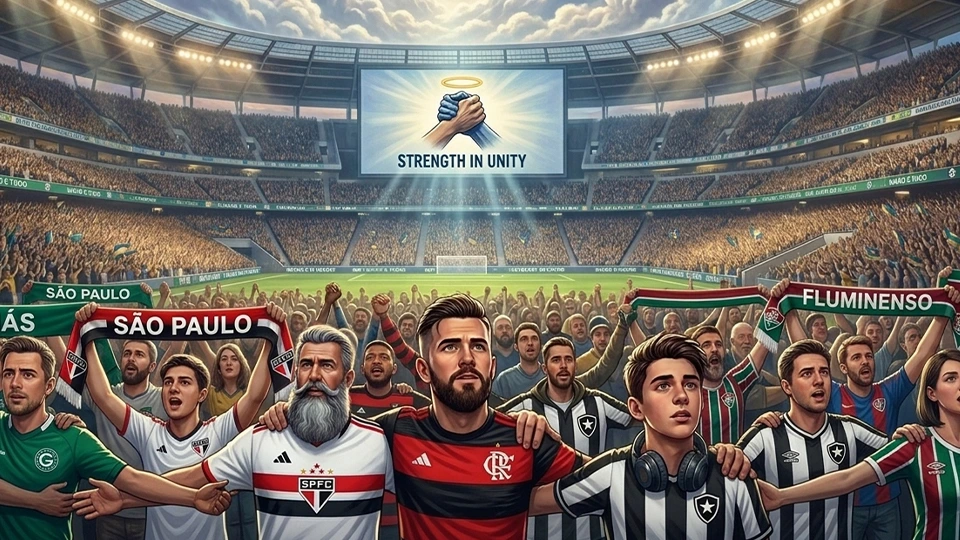
Football fulfills this need remarkably well. A supporter can meet a complete stranger wearing the same jersey and instantly feel a connection. They can travel to another city, spot their club’s flag hanging from a balcony, and immediately recognize their community. They can step into a stadium and experience a collective emotion that would be nearly impossible to feel alone.
This collective power explains much of football’s appeal. Singing alongside thousands of people, suffering through the same missed chance, celebrating the same goal, and repeating the same rituals creates an extraordinary sense of unity. People feel they belong to a community with its own history, traditions, and shared memories.
The problem is that every group also creates boundaries. If there is a “we,” there is inevitably a “they.” In football, that division is embodied by the rival club. The rival is no longer just another team. In many cases, it becomes a psychological symbol of opposition. Supporters project onto their rivals the qualities they reject, fear, or despise.
This mechanism strengthens the group’s internal identity. The more the rival is seen as an enemy, the more united the supporters of one’s own club appear. Fanatics rely on this division because it simplifies the world. Their side represents honor, tradition, greatness, and authenticity. The other side represents arrogance, injustice, inferiority, or threat.
Although emotionally convenient, this simplified worldview limits critical thinking. Football stops being a sporting competition and becomes a moral battleground. A victory by one’s own team feels like proof of superiority. A rival’s victory feels outrageous. A rival’s defeat can bring as much satisfaction as winning a championship because it reinforces the boundary between “us” and “them.”
Why Fans Suffer So Much
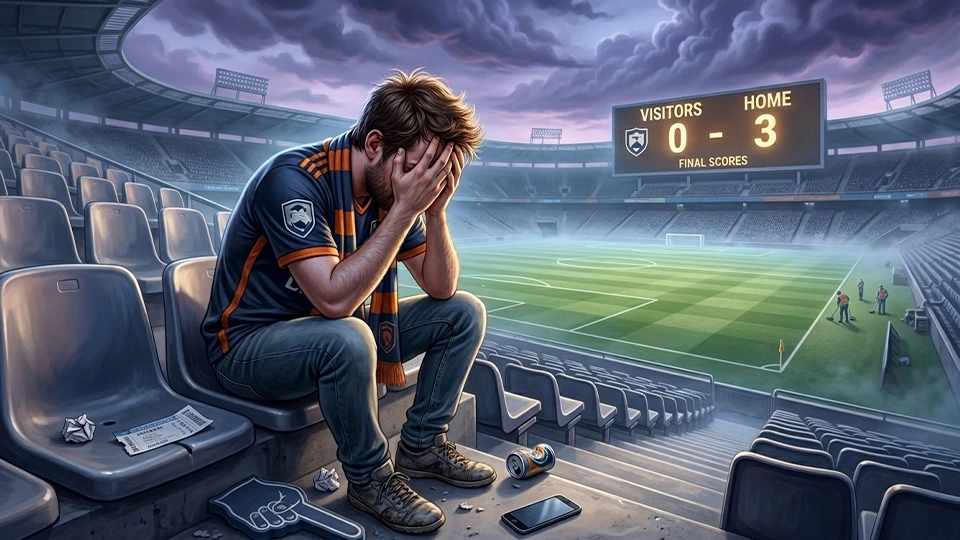
To an outside observer, it may seem strange to watch someone cry, lose sleep, or spend days in a bad mood because of a football match. But the suffering of a fanatic has its own internal logic. They are not simply grieving the result—they are grieving the meaning they attach to it.
A defeat can represent embarrassment in front of friends, fear of being mocked, a sense of helplessness, loss of control, and wounded pride. Losing a championship in the final minutes is not merely a sporting event. For someone deeply identified with their club, it becomes a painful blow to the story they have built about both the team and themselves.
Football also serves as a form of emotional displacement. Many people carry personal frustrations, work-related stress, family conflicts, insecurities, and unresolved resentment that they struggle to process directly. The match becomes an outlet where these emotions find expression. Anger that cannot be directed toward a boss is unleashed at the referee. The desire to succeed in life is redirected into an obsessive need to see the team win. Feelings of personal inadequacy are eased through identification with a powerful club.
This doesn’t mean the supporter is pretending. The emotions are entirely real. The point is that they are often fueled by psychological layers that extend far beyond the ninety minutes on the pitch. Football becomes a screen onto which people project their inner conflicts. That’s why the emotional reaction often seems much larger than the event itself.
There is also the element of unpredictability. Football is a sport in which the better team doesn’t always win. A single mistake, a deflected shot, a red card, or a controversial decision can change everything. This uncertainty creates both anxiety and excitement. Supporters remain emotionally invested precisely because they have no control over the outcome. Psychologically, this creates a powerful cycle of anticipation, tension, frustration, and reward.
When the reward finally arrives, it can be overwhelming. A last-minute goal, an unlikely qualification, an unexpected championship, or a historic comeback triggers an intense emotional release. Fanatics begin chasing that feeling again and again. They long to experience the same relief, euphoria, and shared celebration. The suffering becomes part of the experience because it makes the reward feel even more meaningful.
The Ego Behind the Jersey

Football gives supporters a way to share in achievements they did not accomplish themselves. When the team wins, they say, “We won.” When it loses, they often say, “They lost.” This subtle shift in language reveals something important. The ego moves closer to glory while trying to distance itself from shame.
This is a deeply human tendency. We all do something similar in different areas of life. People feel proud of the company they work for when it succeeds, of their hometown when it is praised, or of their country when one of its athletes wins a medal. Belonging expands the sense of self. The group’s success feels like a personal achievement.
For fanatics, this process becomes much more intense. The club turns into a major source of self-esteem. A person may feel stronger because they support a successful team, more respected because they belong to a massive fan base, or more important because they know statistics, history, and details that others overlook.
The danger is that self-esteem becomes overly dependent on something external and unpredictable. A club can lose, fall into crisis, be eliminated from a tournament, make poor signings, replace its coach, or fail to meet expectations. When a supporter’s self-worth is tied too closely to the team’s performance, every sporting setback becomes a personal crisis.
At this point, the ego becomes defensive. The fanatic starts looking for someone to blame. The referee cheated. The media is biased. The league favors the rival. The coach sabotaged the team. The player doesn’t deserve to wear the jersey. Sometimes these criticisms may contain some truth. The problem arises when a person needs to believe them to avoid a much simpler pain: accepting that their team lost because football, like life, also involves limitations, mistakes, and chance.
Fanatics struggle with ambiguity. They want to love their club without acknowledging its flaws. They want to defend its history without admitting its periods of decline. They want to be loyal without thinking critically. But psychological maturity requires the ability to tolerate contradictions. A club can be loved and criticized. A player can be a hero and still make mistakes. A rival can be an opponent and still play brilliantly.
Aggression and Emotional Release
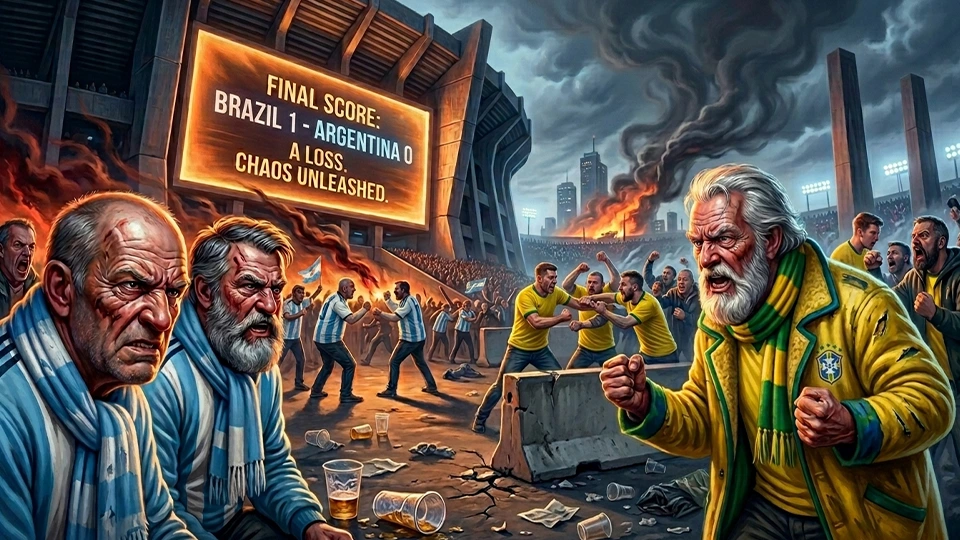
Football has long been associated with aggression. Competition, territorial rivalry, provocative chants, warlike language, and the opposition between groups all activate impulses that are deeply rooted in human nature. The problem is not aggression itself, but the inability to manage it in a healthy way.
In its healthy form, aggression can appear as competitive energy, the ability to defend personal boundaries, the desire to win, and emotional intensity. In its destructive form, it turns into humiliation, threats, physical violence, insults, harassment, and an inability to coexist with people who are different.
For many fanatics, football becomes a socially acceptable outlet for releasing anger. Things they would never say in other settings are expressed freely in the stadium, on social media, or during heated conversations at a bar. The group also reduces individual accountability. Surrounded by a crowd, people often feel permitted to behave in ways they would likely avoid if they were alone.
This phenomenon cannot be explained simply by a “lack of manners.” It also involves deindividuation: a psychological process in which people lose part of their sense of individual identity within a group, feel less personally responsible for their actions, and become more likely to follow the crowd’s impulses. If everyone is shouting, they shout even louder. If everyone is taunting the opposition, they join in more aggressively. If everyone treats the rival as an enemy, they find justification for abandoning self-restraint.
Social media has intensified this process. Supporters can attack players, club officials, journalists, and rival fans in real time. The screen creates emotional distance. People forget that there is another human being on the other side. Aggression spreads through short messages, sarcasm, insults, and absolute judgments.
The relief produced by this emotional release, however, is usually temporary. Anger may subside for a few minutes, but it does not resolve the underlying tension. In fact, it often reinforces the cycle. The more people engage in conflict, the more their emotional system becomes conditioned to respond with irritation. Football, which could be a source of enjoyment, gradually turns into a constant source of emotional exhaustion.
Fanaticism and Groupthink
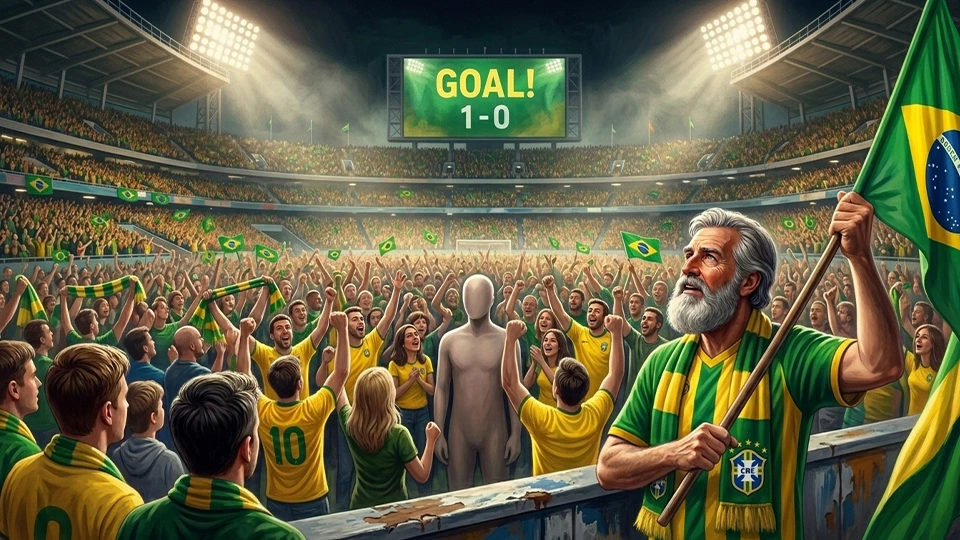
Fanatics rarely see themselves as fanatics. They are more likely to describe themselves as loyal, authentic, deeply committed, or simply more passionate than everyone else. This self-image is reinforced by the group. Within a supporters’ community, extreme behavior may even be celebrated as proof of genuine devotion.
Groupthink operates through repetition and validation. An idea begins circulating, and the more people repeat it, the more true it appears. “Everyone knows the referee always favors that team.” “Everyone knows the media hates our club.” “Everyone knows those supporters are inferior.” These statements gain strength not because of solid evidence, but because they are constantly echoed within the group.
This environment leaves little room for doubt. Anyone who disagrees may be labeled a traitor, naïve, or not a real supporter. As a result, people gradually adjust their thinking to match the group’s beliefs in order to preserve their sense of belonging. The cost is a loss of intellectual independence.
Fanaticism also relies on selective attention. Supporters remember the moments that confirm what they already believe while overlooking those that contradict it. If they believe their club is always treated unfairly, they will remember every refereeing mistake against their team as undeniable proof, while minimizing the mistakes that benefited them. If they believe the rival is always favored, every decision in the rival’s favor becomes further confirmation of that belief.
This selective thinking is not unique to football. It also appears in politics, religion, ideology, and personal relationships. The human mind naturally seeks information that protects existing beliefs. In football, this tendency becomes especially powerful because those beliefs are closely tied to identity and pride.
That’s why arguing with a fanatic can be so exhausting. They are not simply evaluating facts or considering different perspectives. They are defending an emotional attachment. Changing their mind may feel like betraying their club. Acknowledging that the rival played better may seem like diminishing their own community. Critical thinking becomes secondary to the need to belong.
The Difference Between Supporting a Team and Emotional Dependence
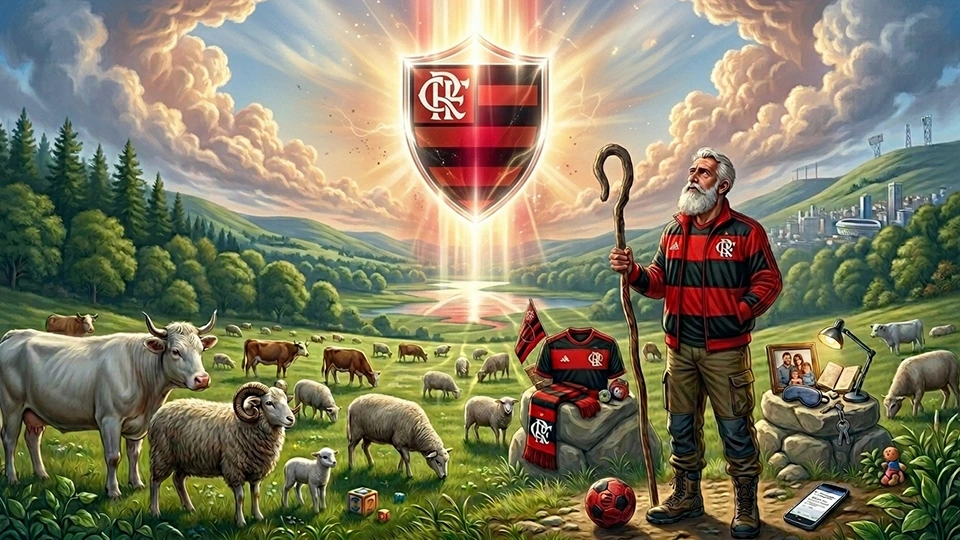
Supporting a team means becoming emotionally involved. Emotional dependence means becoming emotionally captive. That distinction is essential. A person can watch every match, know the club’s history, attend games, and genuinely suffer through defeats without falling into fanaticism. The defining factor is not the intensity of their passion, but the degree of their emotional freedom.
A healthy supporter is able to return to their own life after the final whistle. They may feel disappointed, but they don’t ruin everyone else’s day. They may get frustrated, but they don’t turn every conversation into a battle. They can laugh, handle friendly teasing, and acknowledge when the opposing team deserves credit. They understand that their club matters, but it doesn’t define their entire sense of self-worth.
An emotionally dependent supporter cannot make that separation. Their mood becomes hostage to the result. A defeat damages relationships, affects their work, and disrupts family life. Their emotional reactions become predictable: when the team wins, they feel superior; when it loses, they become bitter, aggressive, or deeply discouraged.
This dependence may conceal a deeper emptiness. Football begins to provide meaning where other areas of life feel unfulfilling. If someone’s personal life lacks purpose, meaningful relationships, fulfillment, or recognition, the club can end up occupying an unhealthy amount of emotional space. The problem isn’t loving the team. The problem is needing the team to support what one’s own life is failing to provide.
In many cases, fanaticism also serves as protection against confronting personal vulnerabilities. It’s easier to argue about the starting lineup than to talk about fear, frustration, loneliness, or failure. It’s easier to hate a rival than to face one’s own dissatisfaction. Football can become a psychological defense mechanism, keeping the mind focused on an external battle in order to avoid an internal one.
This idea requires nuance. It would be an oversimplification to explain every passionate supporter in psychological terms. Not everyone who loves football is running away from themselves. But when the emotional involvement becomes excessive, repetitive, and harmful, it’s worth asking what emotional function it is serving.
The Role of Childhood and Family
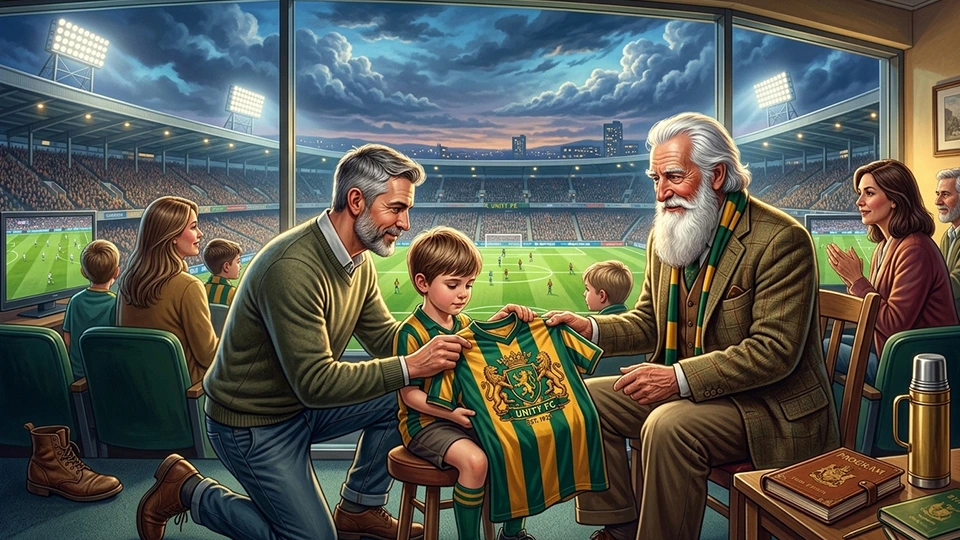
A person’s relationship with football is often passed down as an emotional inheritance. A father takes his child to the stadium. A grandfather shares stories from the past. A mother dresses her child in the club’s jersey. Long before there is any conscious choice, the team has already become part of the child’s life.
This tradition can be something beautiful. Football creates shared memories across generations. A match watched together as a family can become a lifelong memory. A championship can define an entire period of life. An old jersey can carry greater emotional value than any expensive possession.
Yet the same inheritance can also bring pressure. In some families, choosing a different club is treated as an act of betrayal. Showing less interest in football may be viewed as strange or disappointing. Children learn that belonging to the family also means embracing that club and sharing the same level of devotion.
When this happens, supporting the team stops being a choice and becomes a symbolic obligation. People grow up linking loyalty to their family with loyalty to the club. Questioning that connection, changing their mind, or simply caring less can trigger feelings of guilt. Fanaticism becomes stronger because it is tied to some of our earliest emotional experiences: love, approval, pride, and the fear of being excluded.
Football is also often one of the few socially acceptable emotional languages available to men. In many cultures, men are not taught to speak openly about fear, sadness, vulnerability, or affection. Yet they can talk about football for hours. They can embrace complete strangers after a goal. They can cry over a championship. They can declare their love for a club with a freedom they may never experience in other relationships.
This reveals an important paradox. Football can open valuable emotional doors, yet it can also limit emotional expression when it becomes the only available outlet. A person feels deeply, but only through the team. They cry, but only for the club. They love, but mainly the jersey. They suffer, but transform that suffering into rivalry.
The Need for Heroes and Villains
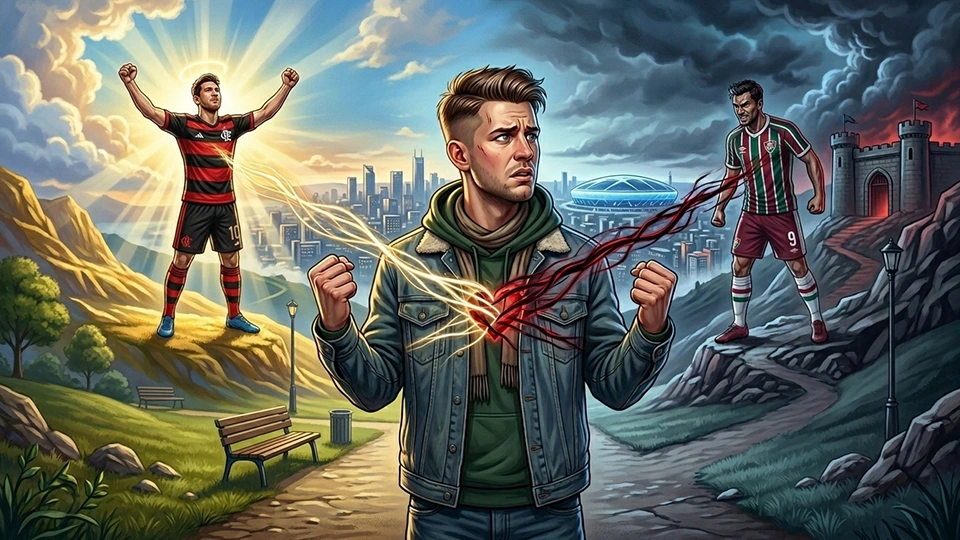
Football naturally creates simple yet powerful narratives. There are heroes, traitors, villains, redemption stories, dramatic falls, comebacks, injustices, promises, and glorious memories. The human mind is drawn to stories because they bring order to chaos.
Fanatics often exaggerate this tendency. A player in great form becomes a savior. A player who makes a mistake becomes the enemy within. A winning coach is hailed as a genius. The very same coach, after three consecutive defeats, is suddenly seen as utterly incompetent. Judgments shift with the emotional tide of the moment.
This emotional swing reveals a low tolerance for complexity. Fanatics crave clear answers, well-defined characters, and immediate scapegoats. They struggle to accept that a team’s performance depends on countless factors: physical preparation, tactics, management, finances, luck, the squad’s psychological state, scheduling, refereeing, the opponent’s quality, and the individual form of each player.
The search for heroes also reflects a desire for representation. Supporters want to see someone on the pitch who embodies the qualities they wish they possessed: courage, decisiveness, respect, and victory. The idol becomes an imagined source of greatness. That’s why disappointment with a beloved player can be so painful. It isn’t just the player who falls from grace—the idealized image that fueled the supporter’s own emotions falls with them.
The enemy serves a similar function, but in the opposite direction. It becomes the focal point for anger. It may be the rival club, the referee, club executives, the media, or even a specific player. Having an enemy simplifies emotional pain. Instead of dealing with vague frustration, the fanatic directs it toward a single target. This provides temporary psychological relief, even though it weakens their ability to think objectively.
The Role of Social Media in Fanaticism
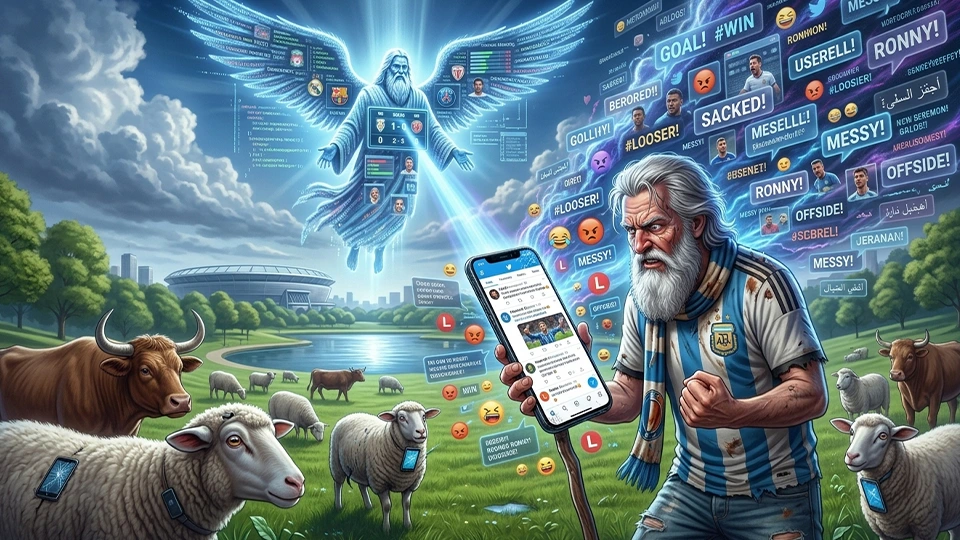
Social media has completely transformed the experience of being a football supporter. In the past, discussions were mostly limited to the stadium, the workplace, family gatherings, neighborhood bars, or sports television. Today, supporting a club is a twenty-four-hour experience. Every minute brings new headlines, rumors, video clips, taunts, statistics, memes, opinions, and controversies.
This constant exposure keeps the supporter’s emotional system permanently activated. Even when there isn’t a match, there is another crisis. And if there isn’t one, someone will create it. A player’s comment becomes a scandal. A training-ground photo sparks endless debate. A journalist’s opinion is interpreted as an attack on the club. The mind never truly gets a chance to rest.
The algorithm favors content that provokes a reaction. Outrage, sarcasm, and conflict generate engagement. Fanatical supporters are especially vulnerable to this environment because their identity is already deeply invested. They click, reply, share, argue, and return to see whether someone has responded.
This creates a dependence on constant stimulation. Football no longer occupies only match time—it fills the small gaps throughout the day. People check transfer news at work, respond to taunts before going to bed, and wake up searching for updates. The club becomes a constant presence in their thoughts.
Social media also encourages people to perform their loyalty. Many supporters feel the need to prove that they love more, know more, suffer more, or defend their club more fiercely than everyone else. Moderate opinions receive less attention because moderation rarely earns applause within the group. Exaggeration is mistaken for courage. Aggression is mistaken for authenticity.
In this environment, fanaticism is not merely expressed—it is rewarded. The loudest voices receive the most visibility. The most provocative comments attract the most responses. The most simplistic opinions spread the fastest. Social media turns emotional impulses into public performances.
When Fanaticism Causes Real Harm
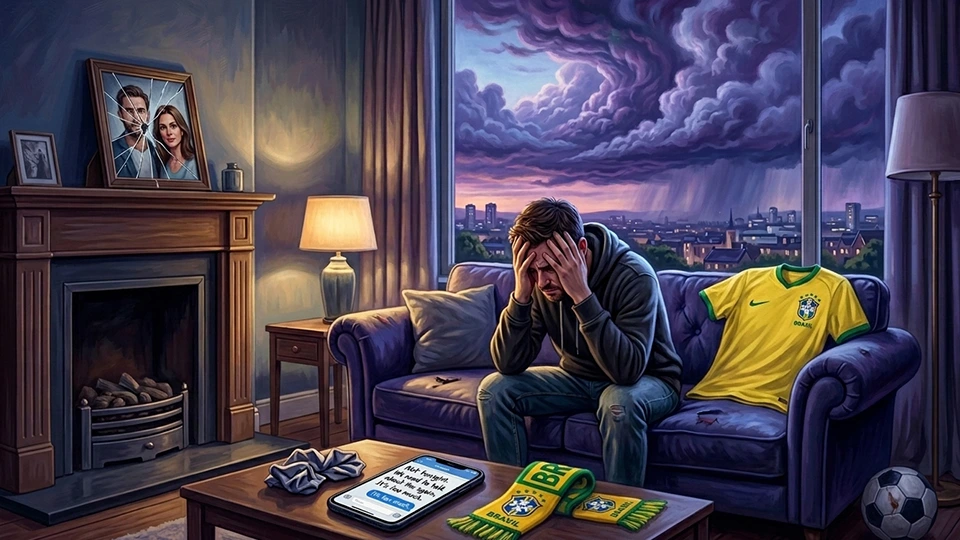
Fanaticism stops being just a personality trait when it begins causing tangible harm. This can happen in several ways. The first is damage to relationships. A person becomes difficult to live with on match days, verbally attacks family members, humiliates rival supporters, ends friendships over football banter, or turns every social setting into a battleground.
The second is emotional harm. A person’s mood becomes excessively dependent on the club’s performance. Defeat brings emotional instability, sleeplessness, lingering irritability, or a sense of emptiness. Victory produces exaggerated euphoria and feelings of superiority. Emotional life becomes unstable because it is tied to outcomes the person has no control over.
The third is practical harm. Spending beyond one’s financial means, missing work, neglecting responsibilities, getting involved in fights, abusing alcohol on match days, or putting oneself in dangerous situations may all indicate that passion has crossed healthy boundaries.
The fourth is the narrowing of one’s identity. When nearly everything revolves around the club, other aspects of life begin to disappear. The person talks only about football, consumes only football-related content, defines themselves solely through their club, and judges others based on the team they support. In doing so, they reduce the richness and complexity of their own identity.
One important warning sign is the inability to laugh at oneself. Healthy supporters can joke about their own passion. Fanatics become rigid. A joke feels like an insult. Criticism feels like a personal attack. The rival becomes an enemy. This rigidity reveals an identity that has become too fragile to tolerate even minor symbolic threats.
Another warning sign is the loss of empathy. When another person is no longer seen as a human being but simply as “a rival supporter,” it becomes much easier to insult, humiliate, or wish suffering upon them. Fanaticism narrows one’s moral perspective. People begin treating members of their own group better and those outside it worse, as though a football jersey determined a person’s worth.
How to Develop a Healthier Relationship with Football
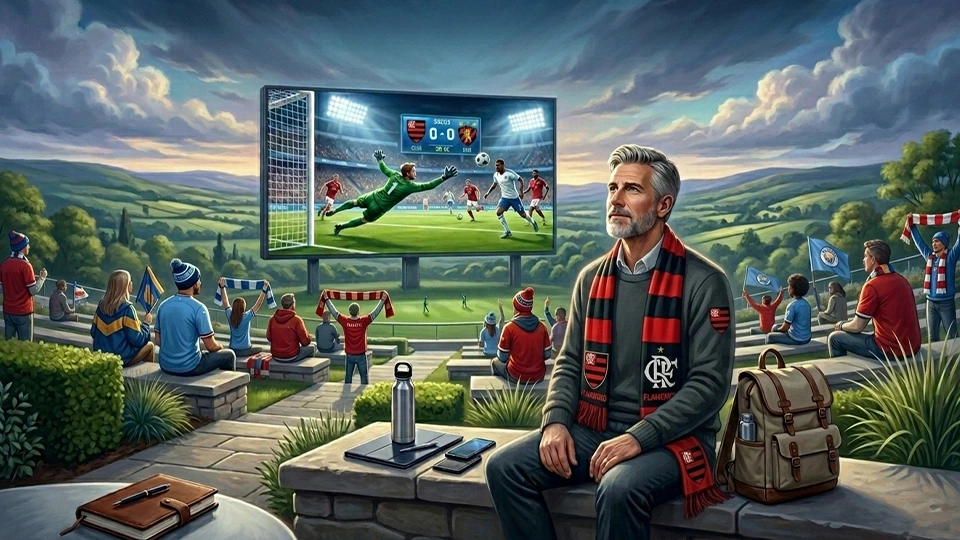
A mature relationship with football doesn’t require emotional detachment. It isn’t about stopping yourself from celebrating, suffering, or feeling excited. The goal is to regain a sense of proportion. Football can be deeply important without becoming the center of your entire identity.
The first step is recognizing the difference between involvement and emotional fusion. Saying, “My team lost,” is very different from feeling, “I have been destroyed.” Your club can be an important part of your life, but it should never consume the whole of who you are. Your identity needs to be larger than a football jersey.
The second step is observing your own behavior after matches. How do you treat people when your team loses? How much does your mood change? How long does it take you to regain emotional balance? Can you accept light-hearted teasing? Can you acknowledge when a rival deserves praise? These questions reveal the degree of your emotional freedom.
The third step is limiting exposure to environments that fuel emotional reactivity. If certain accounts, online groups, or sports programs consistently leave you feeling angry, they may no longer be sources of information—they may simply be emotional fuel. Every supporter benefits from being more selective about what they consume.
The fourth step is preserving other sources of meaning. Work, education, family, friendships, health, spirituality, reading, personal projects, and rest should never become secondary to football. The richer your life is outside the game, the less emotional weight any single result has to carry.
The fifth step is embracing complexity. You can love your club without idealizing it. You can respect a rival without becoming less loyal to your own team. A referee can make an honest mistake without every decision being part of a conspiracy. A player can have a poor performance without becoming an enemy. Psychological maturity begins when we learn to tolerate nuance.
Finally, it’s worth remembering that football is meaningful precisely because it is human. It involves mistakes, chance, talent, injustice, perseverance, failure, and memory. Turning every match into a moral war diminishes the beauty of the sport. Mature supporters don’t love their club any less—they simply love it with greater awareness.
Conclusion
Football fanaticism reveals something that goes far beyond the sport itself. It shows how the human mind seeks belonging, identity, recognition, and emotional relief. It demonstrates how a group can strengthen a person while also limiting their autonomy. And it reminds us that passion can either enrich life or imprison the mind.
Supporting a football club is a deeply human experience. Belonging to a community of supporters can be joyful, meaningful, and unforgettable. The problem begins when the jersey no longer represents one part of a person’s life but takes the place of life itself. At that point, they are no longer simply supporting a club—they depend on it to feel valuable, strong, and connected to the world.
The psychology of football fanatics helps us understand that excess is rarely just excess. Beneath it may lie fear of exclusion, a need for recognition, unresolved anger, a fragile sense of self, family history, the search for meaning, and difficulty coping with frustration.
The healthiest path is not to give up football but to restore perspective. Celebrate without humiliating others. Suffer without destroying yourself or those around you. Belong without surrendering your independence. Love your club without turning every rival into an absolute enemy. Recognize that a defeat can hurt, but it does not determine a person’s worth.
In the end, football remains a powerful mirror of human nature. On the pitch, we see skill, strategy, and competition. In the stands and across social media, we also see pride, fear, the longing to belong, and the search for meaning. Mature supporters understand this. They know their passion can remain just as intense without having to control their minds.